
This sabudana kheer is a creamy Indian dessert made with soaked sabudana, milk, sugar, cardamom, nuts, and saffron.
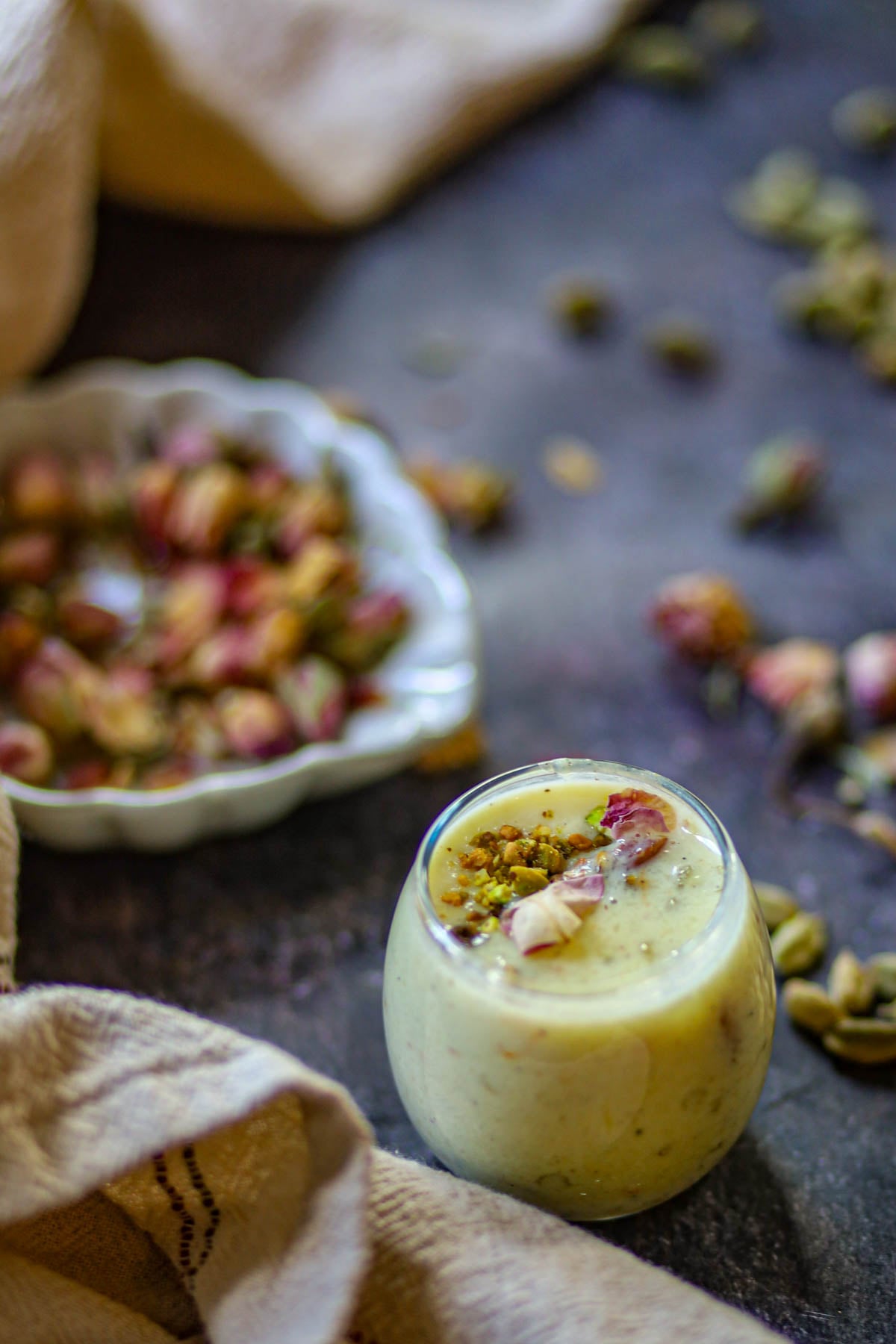
I make it on the stovetop because it gives me better control over the texture. The sabudana cooks gently in the milk until the pearls soften and turn translucent, while the milk thickens into a creamy pudding.
It is simple, lightly sweet, and works especially well for festivals and vrat days.
Jump to:
- What Is Sabudana Kheer?
- Why You'll Love This Sabudana Kheer
- Ingredients for Sabudana Kheer
- How to Soak Sabudana
- How to Make Sabudana Kheer on the Stovetop
- Tips for Creamy Sabudana Kheer
- How to Know When Sabudana Is Cooked
- How Thick Should Sabudana Kheer Be?
- Navratri and Vrat Notes
- Can I Make Sabudana Kheer Ahead?
- How to Serve Sabudana Kheer
- Frequently Asked Questions
- More Dessert Recipes
- Sabudana Kheer
What Is Sabudana Kheer?
Sabudana kheer is an Indian tapioca pudding made with sabudana, also called sago or tapioca pearls. You can find nutrition information for tapioca in the USDA FoodData Central database.
First, soak the pearls, then simmer them in milk until soft and translucent. Sugar, cardamom, nuts, and saffron add sweetness and flavor.
People commonly make it during fasting periods such as Navratri, but it also works as an easy everyday dessert.
Why You'll Love This Sabudana Kheer
This version is:
- made on the stovetop
- creamy without needing cream
- lightly sweet
- flavored with cardamom and saffron
- easy to make with a short ingredient list
- suitable for vrat when using ingredients that fit your family's fasting rules
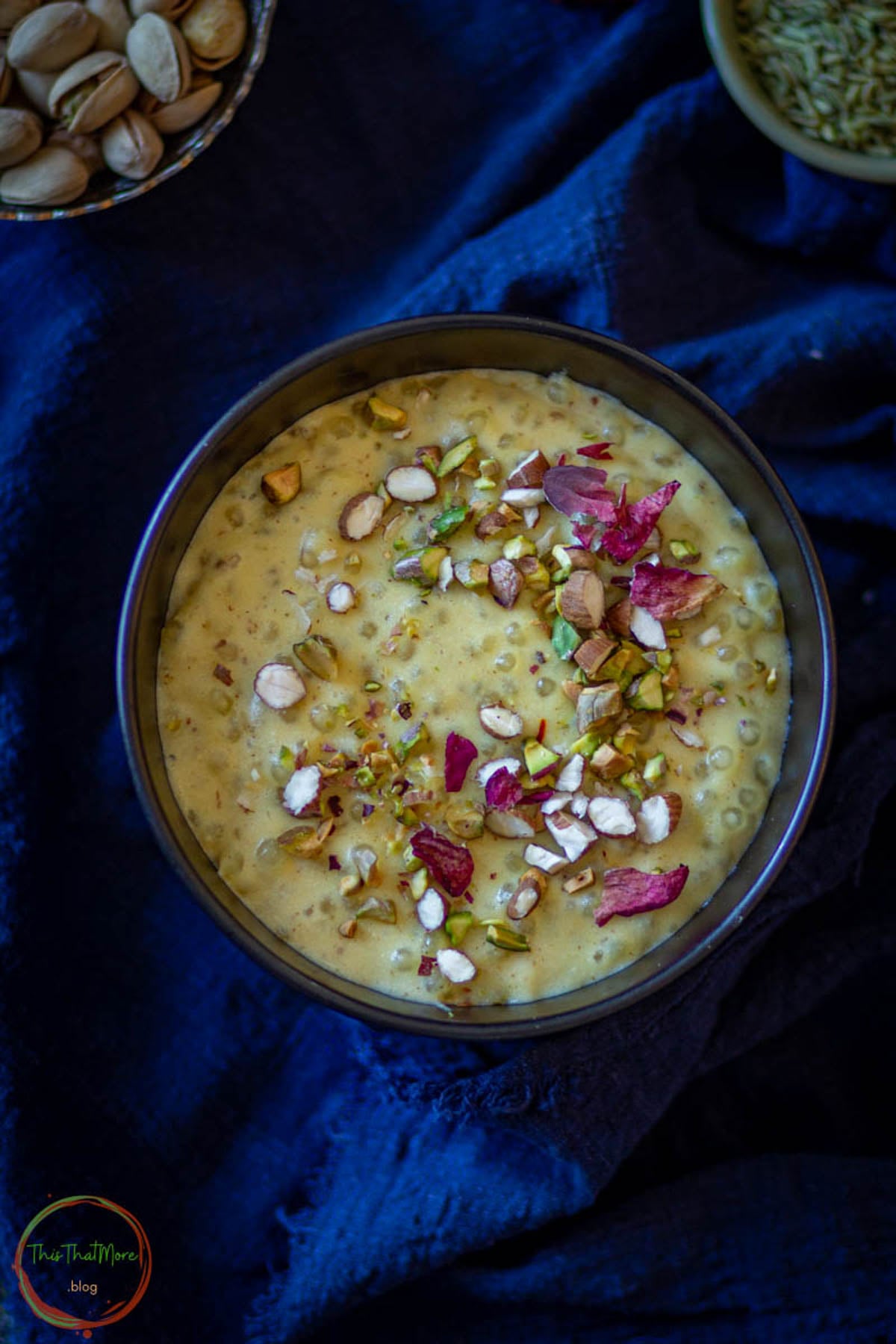
Ingredients for Sabudana Kheer
- Sabudana: Use ½ cup sabudana. Soaking helps the pearls soften before cooking and gives them a more even texture.
- Milk: Use 3 cups of milk. The sabudana cooks directly in the milk, which helps create the creamy texture.
- Sugar: I use ¼ cup sugar. Taste and adjust slightly depending on how sweet you like your kheer.
- Cardamom: Cardamom gives the kheer its classic warm flavor.
- Nuts: Add chopped nuts for texture and richness. Use whatever combination you like.
- Saffron: A small amount of saffron adds color and a delicate aroma.
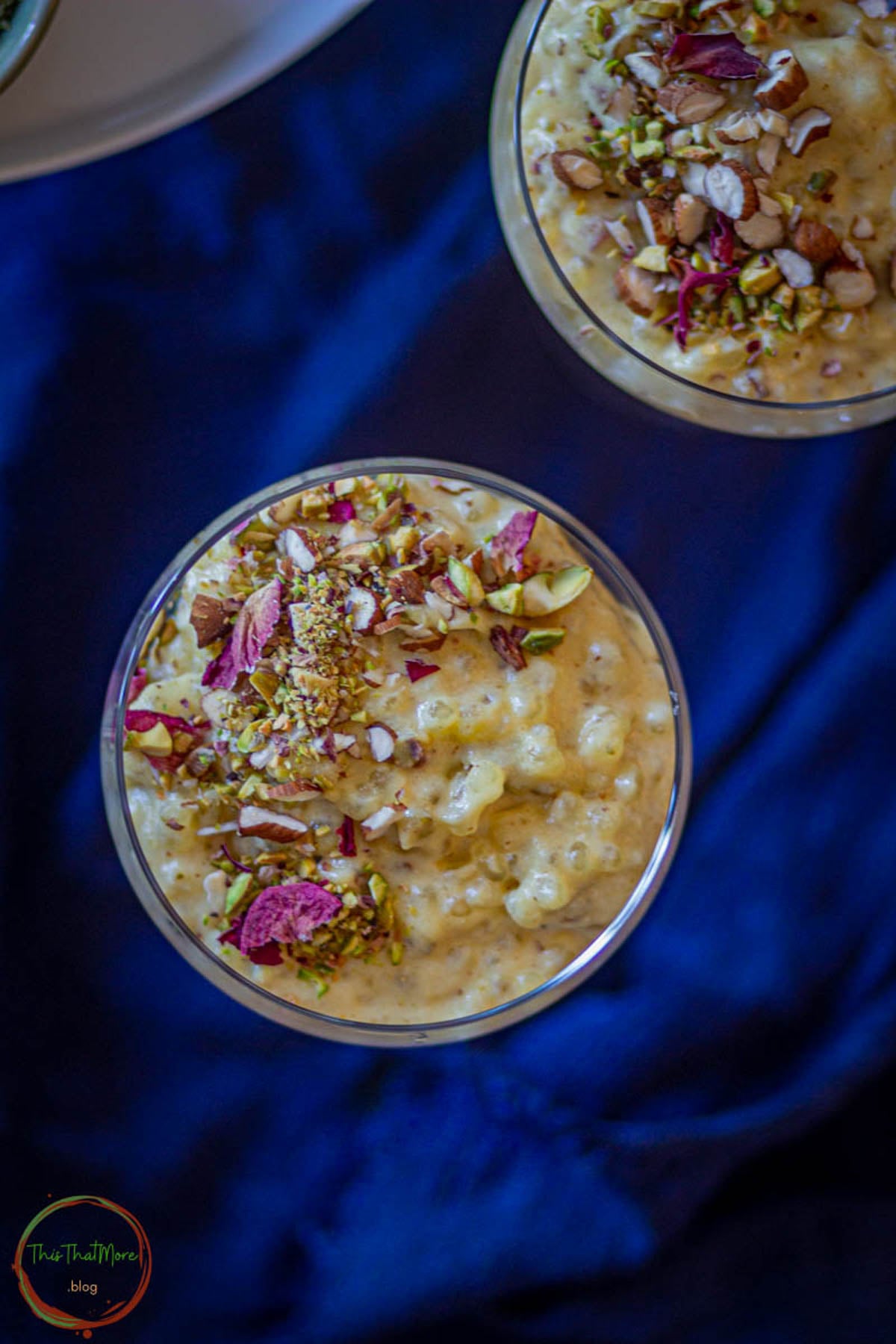
- Garnish: Lastly, garnish with chopped pistachios and rose petals.
How to Soak Sabudana
Rinse the sabudana well, then soak it for about 30 minutes. You do not need to soak it overnight for this recipe. After soaking, the pearls should begin to soften but still hold their shape.
How to Make Sabudana Kheer on the Stovetop
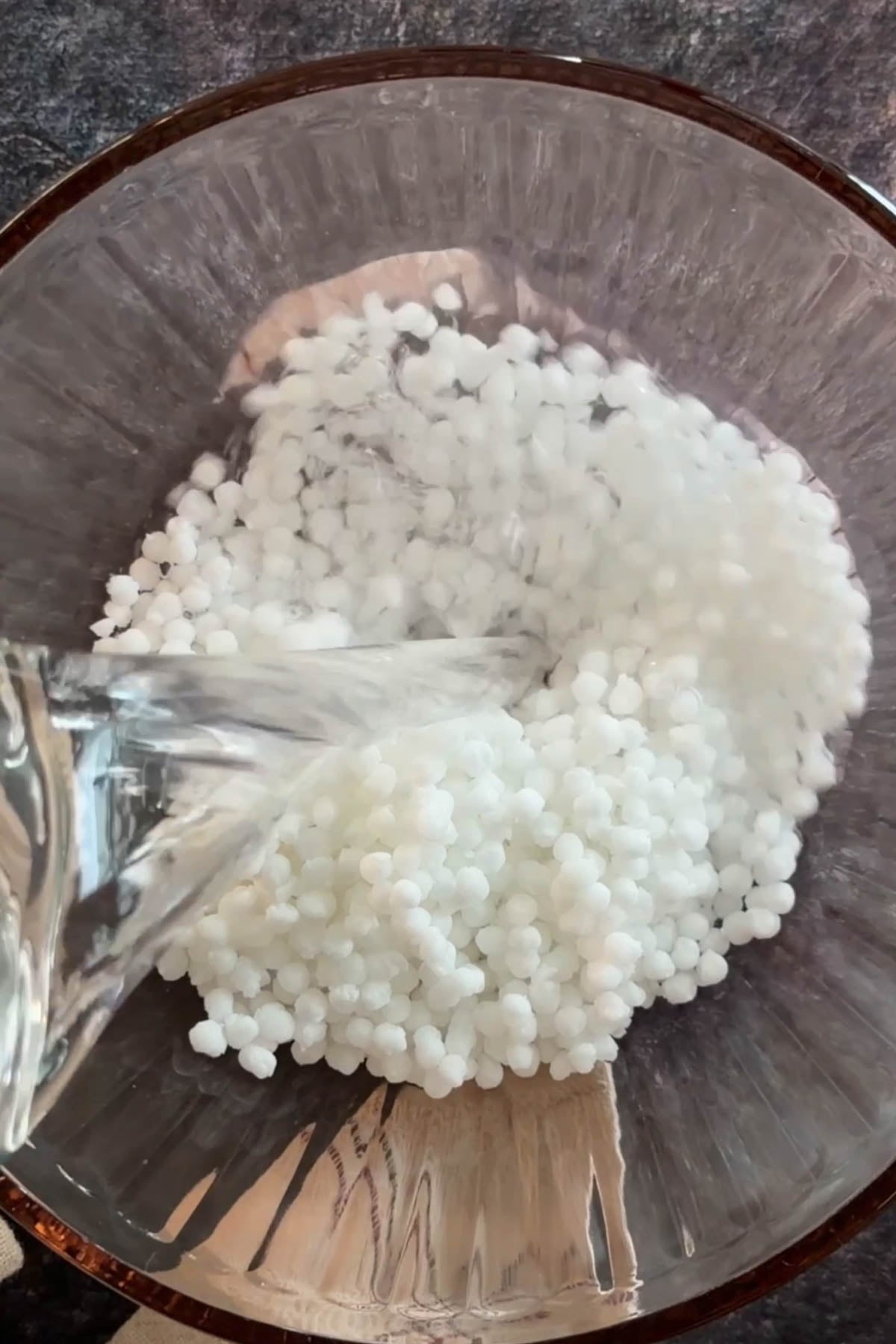
1. Soak the Sabudana
Rinse ½ cup sabudana and soak for about 30 minutes. Drain if there is excess water.
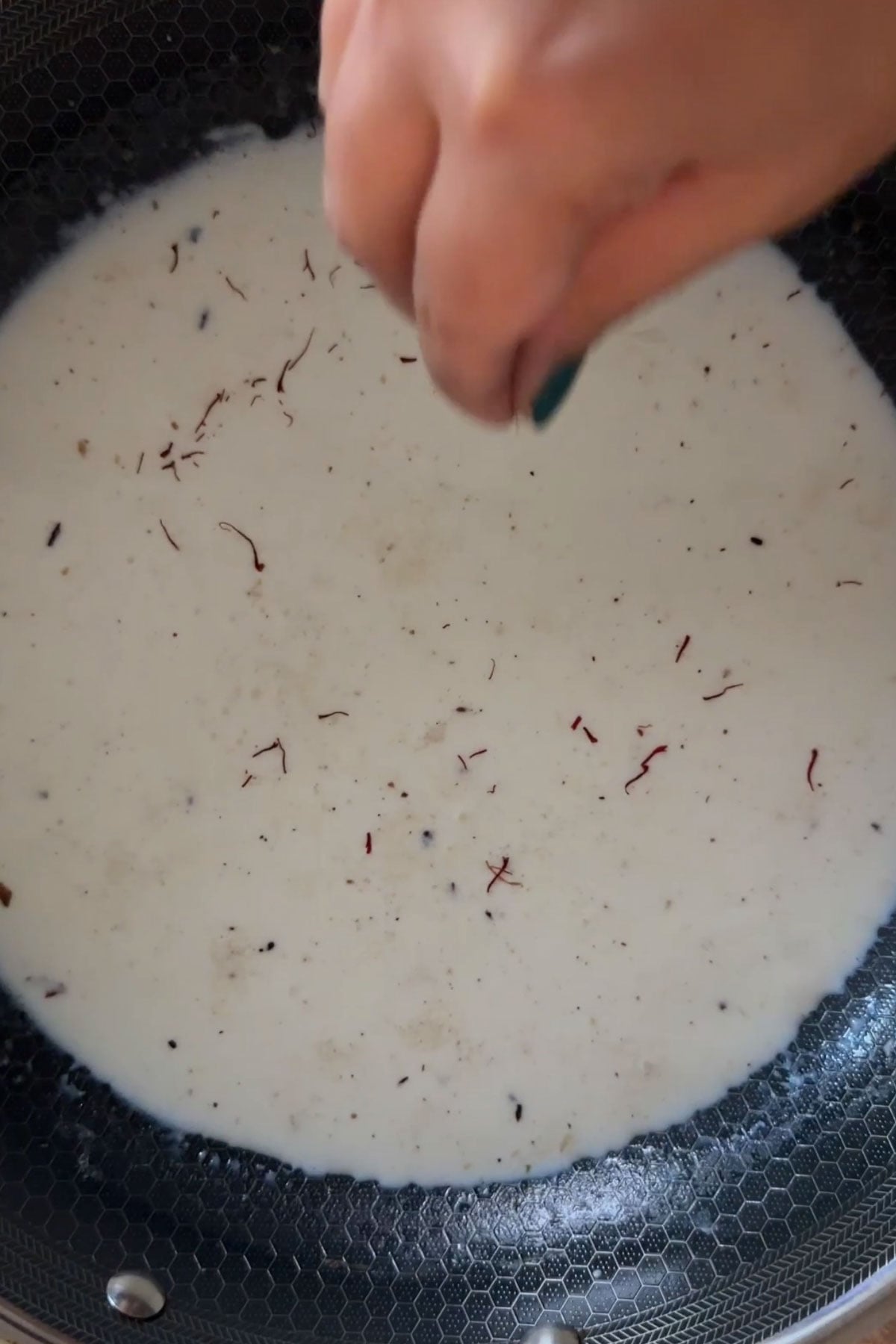
2. Heat the Milk
Add 3 cups of milk to a heavy-bottomed saucepan. Bring it to a gentle simmer over medium heat.
3. Add the Sabudana
Add the soaked sabudana and saffron to the simmering milk. Stir well so the pearls do not settle and stick to the bottom.
4. Cook Until Soft
Cook over medium-low heat, stirring regularly. The sabudana will gradually soften and turn translucent.
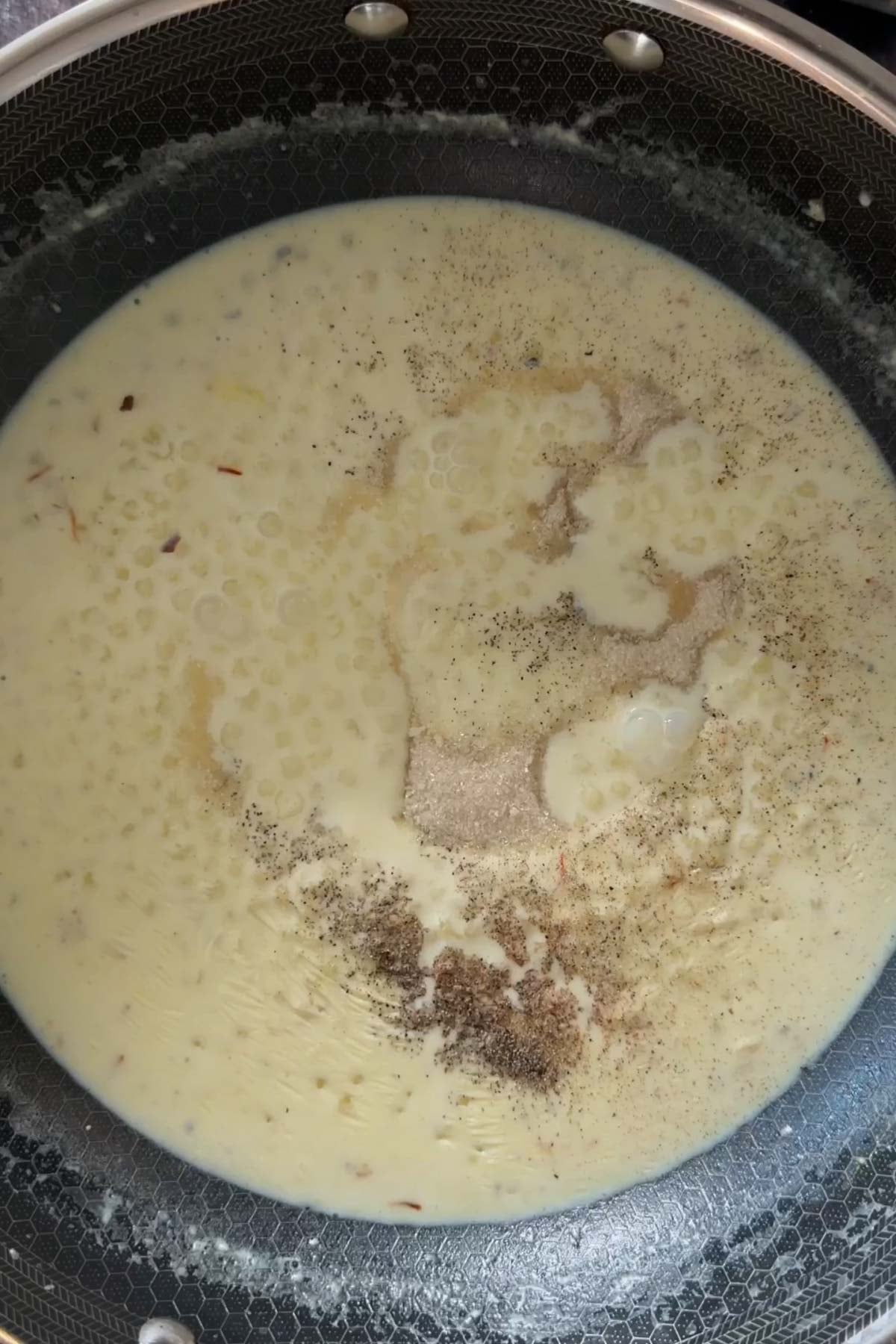
5. Add Sugar
Once the pearls are cooked, add sugar and cardamom powder, and stir until dissolved.
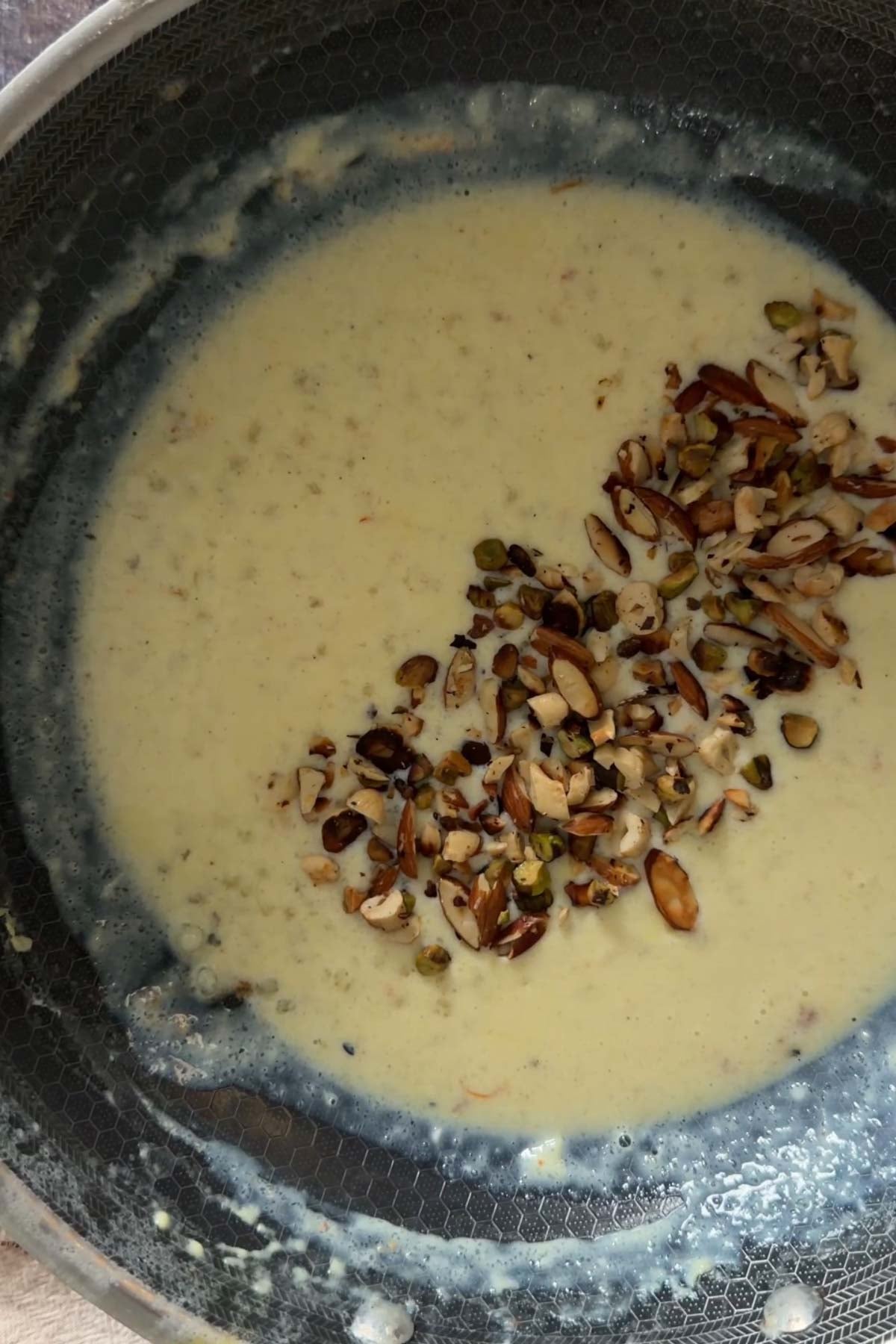
6. Add Nuts
Fry the nuts in ghee until lightly golden. Add nuts to the kheer for a few more minutes so the flavors blend into the milk.
7. Check the Consistency
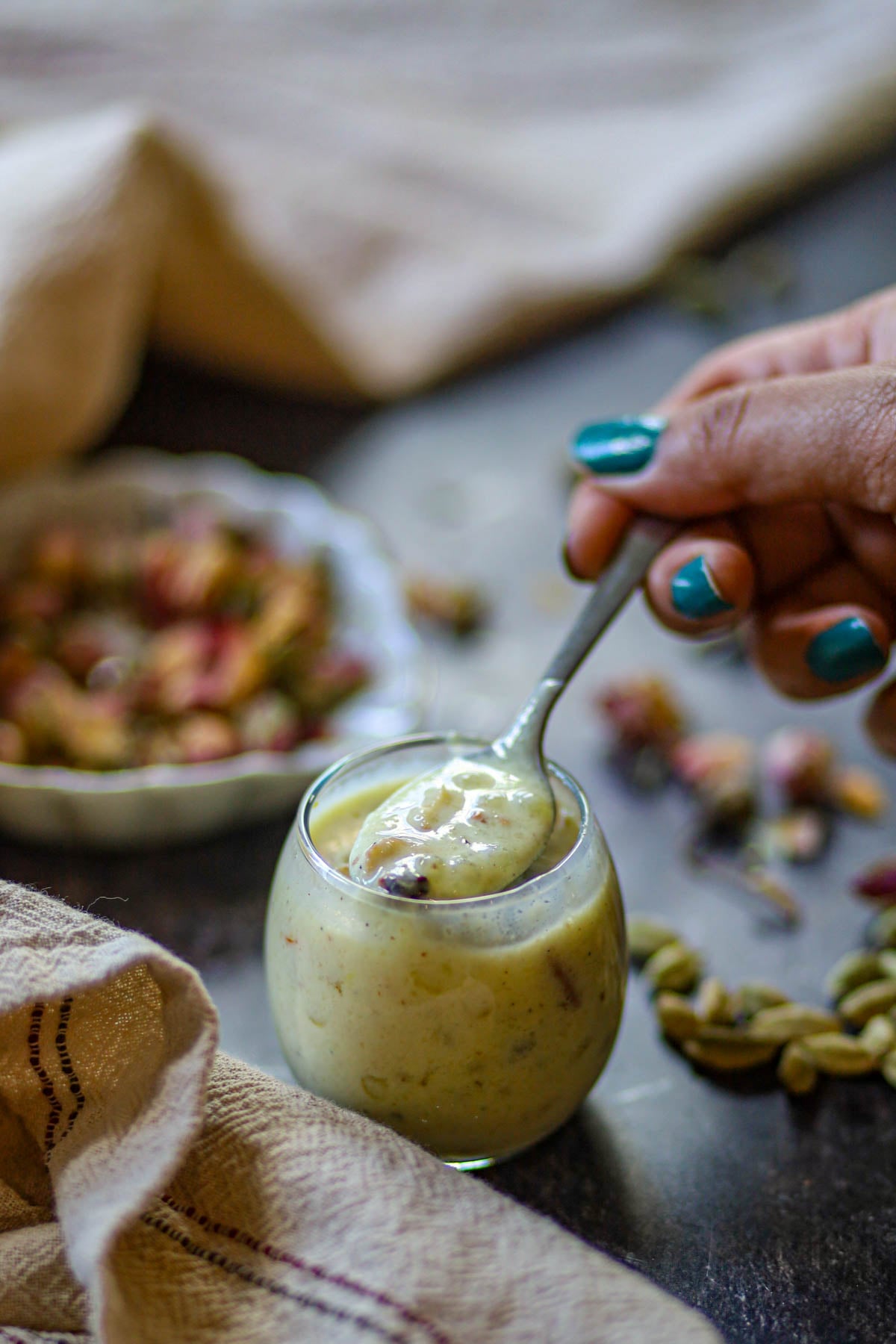
Turn off the heat while the kheer is still slightly thinner than you want. It will continue to thicken as it cools.
Serve warm or chilled.
Tips for Creamy Sabudana Kheer
- Use a heavy-bottomed pan: Milk can catch easily at the bottom, so a heavier pan makes the process easier.
- Keep the heat moderate: A gentle simmer gives the sabudana time to cook without scorching the milk.
- Stir regularly: Sabudana can settle at the bottom of the pan, so stir every few minutes.
- Do not overcook: Once the pearls are soft and translucent, they are done.
- Add sugar after the sabudana is mostly cooked: This keeps the cooking process simple and lets you judge the texture first.
- Turn off the heat before it looks too thick: The kheer thickens noticeably as it cools.
How to Know When Sabudana Is Cooked
Cooked sabudana should look mostly translucent and feel soft when you bite into it. If the center still looks white or feels firm, cook it a little longer.
The pearls should be soft, but the kheer should not turn into a paste.
How Thick Should Sabudana Kheer Be?
The kheer should be creamy and spoonable, not dry or overly thick. When hot, it will look a little loose.
As it cools, both the milk and sabudana thicken. If the kheer becomes too thick later, stir in a little milk before serving.

Navratri and Vrat Notes
Sabudana kheer is commonly made during fasting periods because sabudana is often included in vrat meals. If you're making this for Navratri or vrat, you can also try my Sabudana Khichdi for a savory sabudana recipe.
If you are making it specifically for Navratri or another fast, use ingredients that match your household's fasting rules.
The basic combination of sabudana, milk, sugar, cardamom, nuts, and saffron keeps this version simple.
Can I Make Sabudana Kheer Ahead?
Yes.
Let it cool completely, then refrigerate it in an airtight container. Because it thickens in the refrigerator, stir in a little milk before serving if needed.
How to Serve Sabudana Kheer
You can serve it:
- warm
- at room temperature
- chilled
I like adding a few extra chopped nuts and saffron strands on top before serving. If you enjoy creamy Indian desserts, you may also like my Mango Kheer.
Frequently Asked Questions
They are similar because both use tapioca pearls, but sabudana kheer is flavored in the Indian style with ingredients such as cardamom, saffron, and nuts.
For this recipe, 30 minutes works well.
It needs a little more cooking. Continue simmering until the pearls turn soft and mostly translucent.
Sabudana continues absorbing liquid as the kheer sits.
Add a little milk and stir until you reach the consistency you prefer.
Yes.
You can reduce the sugar slightly depending on your preference.
Yes.
It tastes good chilled, but you may need to loosen it with a little milk after refrigeration.
More Dessert Recipes
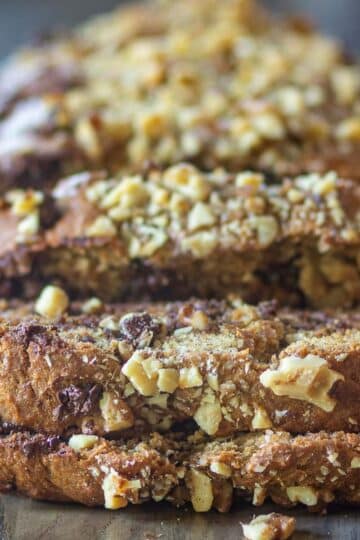
- Eggless Banana Bread in Air Fryer (High Protein & Healthy)
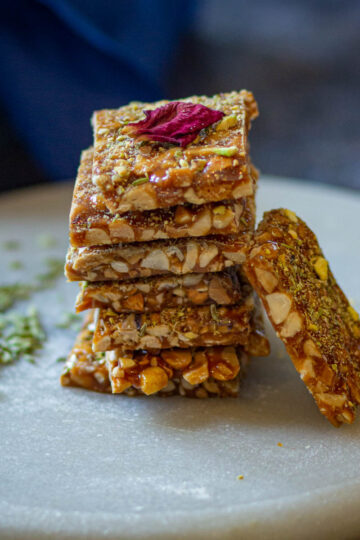
- PEANUT CHIKKI RECIPE (TRADITIONAL PEANUT GAJAK)
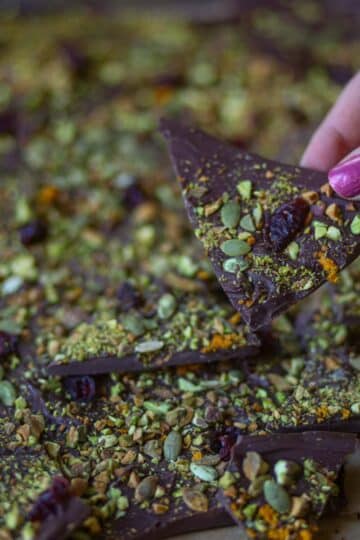
- Pistachio Cranberry Chocolate Bark (Easy Holiday Treat!)
- CARROT HALWA WITH KHOYA

Sabudana Kheer
Ingredients
Equipment
Method
- Rinse and soak the sabudana: Rinse the sabudana under water until the water runs mostly clear. Soak it in water for about 30 minutes, then drain any excess water.
- Add the nuts: Stir in the chopped almonds and cashews, and cook for another 2-3 minutes in ghee.
- Heat the milk: Add the milk to a heavy-bottomed saucepan and bring it to a gentle simmer over medium heat.
- Add the sabudana: Strain the sabudana and add it to the milk and saffron. Cook over medium-low heat, stirring often so the pearls don't stick to the bottom of the pan.
- Cook Sabudana: Add the saffron strands and continue simmering until the sabudana begins to turn soft and translucent.
- Add sugar and cardamom: Once the sabudana is mostly cooked, add the sugar and cardamom. Stir well and continue cooking until the sugar dissolves and the kheer becomes creamy.
- Finish the kheer: Add nuts, then turn off the heat while the kheer is still slightly thinner than your preferred consistency, as it will thicken as it cools.
- Serve: Serve the sabudana kheer warm, at room temperature, or chilled. Garnish with additional nuts and saffron if desired.
Nutrition
Notes
- Rinse sabudana well before soaking to remove excess starch.
- Soaking for about 30 minutes helps the pearls soften and cook more evenly.
- Stir frequently while cooking because sabudana and milk can stick to the bottom of the pan.
- Cook until the sabudana pearls are soft and mostly translucent.
- Add the sugar after the sabudana has mostly cooked.
- Do not cook the kheer until very thick. It will continue to thicken as it cools.
- If refrigerated kheer becomes too thick, stir in a little milk before serving.
- Adjust the amount of sugar depending on how sweet you prefer your kheer.
- For Navratri or vrat, use ingredients that follow your family's fasting practices.






Leave a Reply