
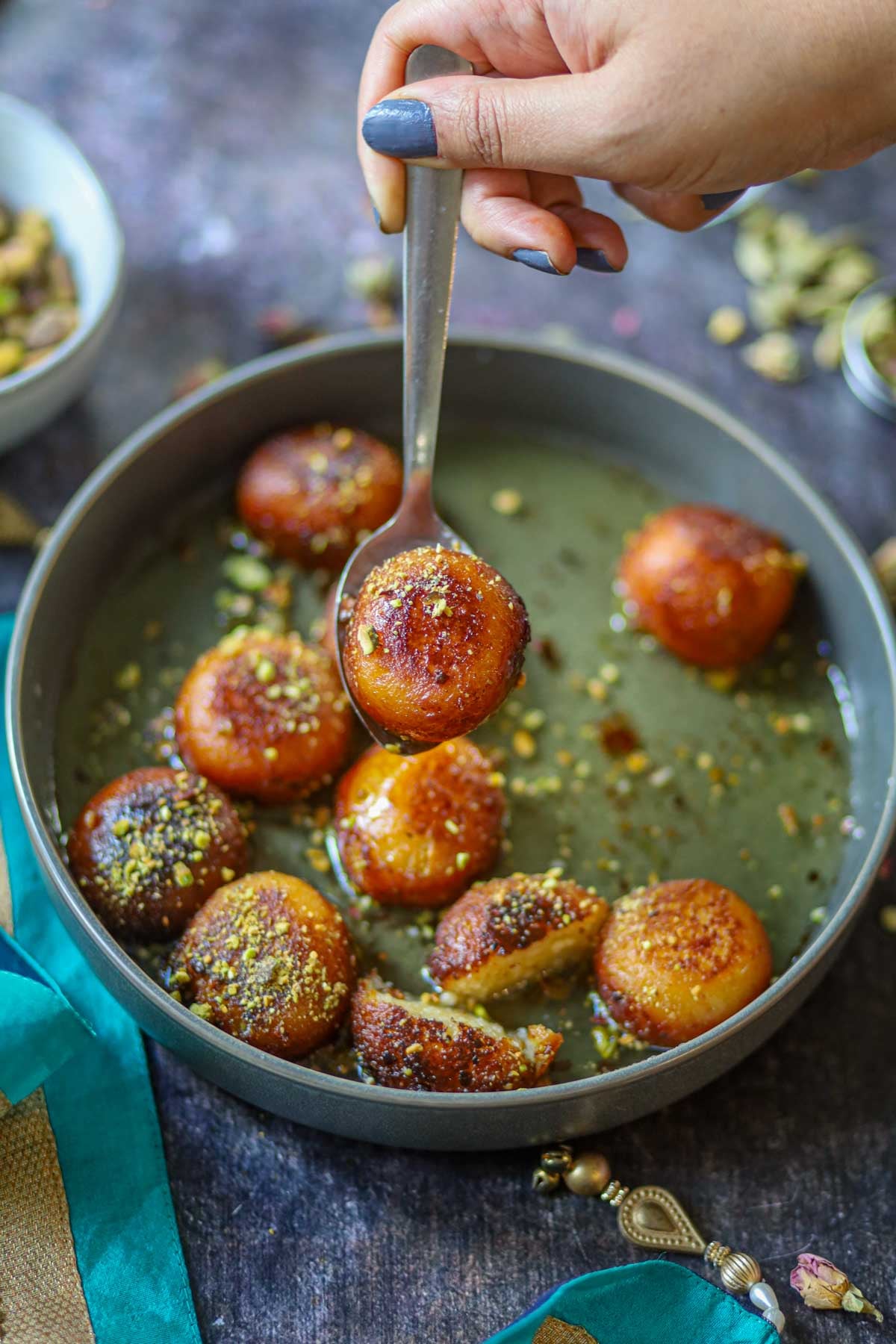
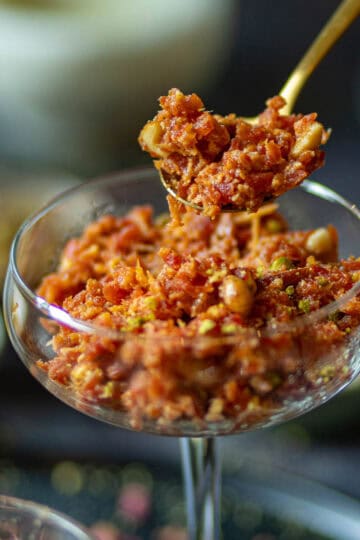
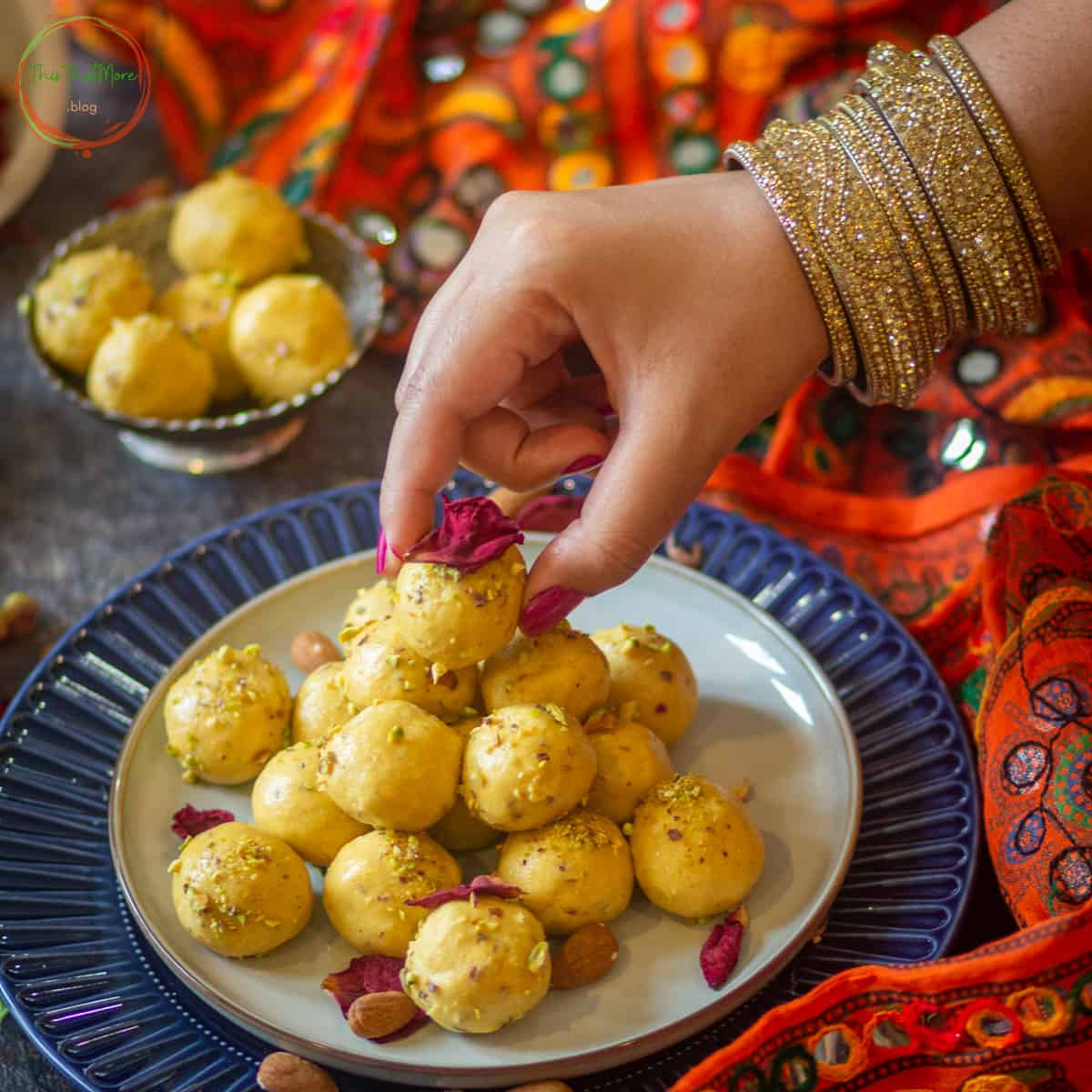
These Gulab Jamun with Khoya are soft, rich, and soaked in a lightly fragrant cardamom and rose sugar syrup.
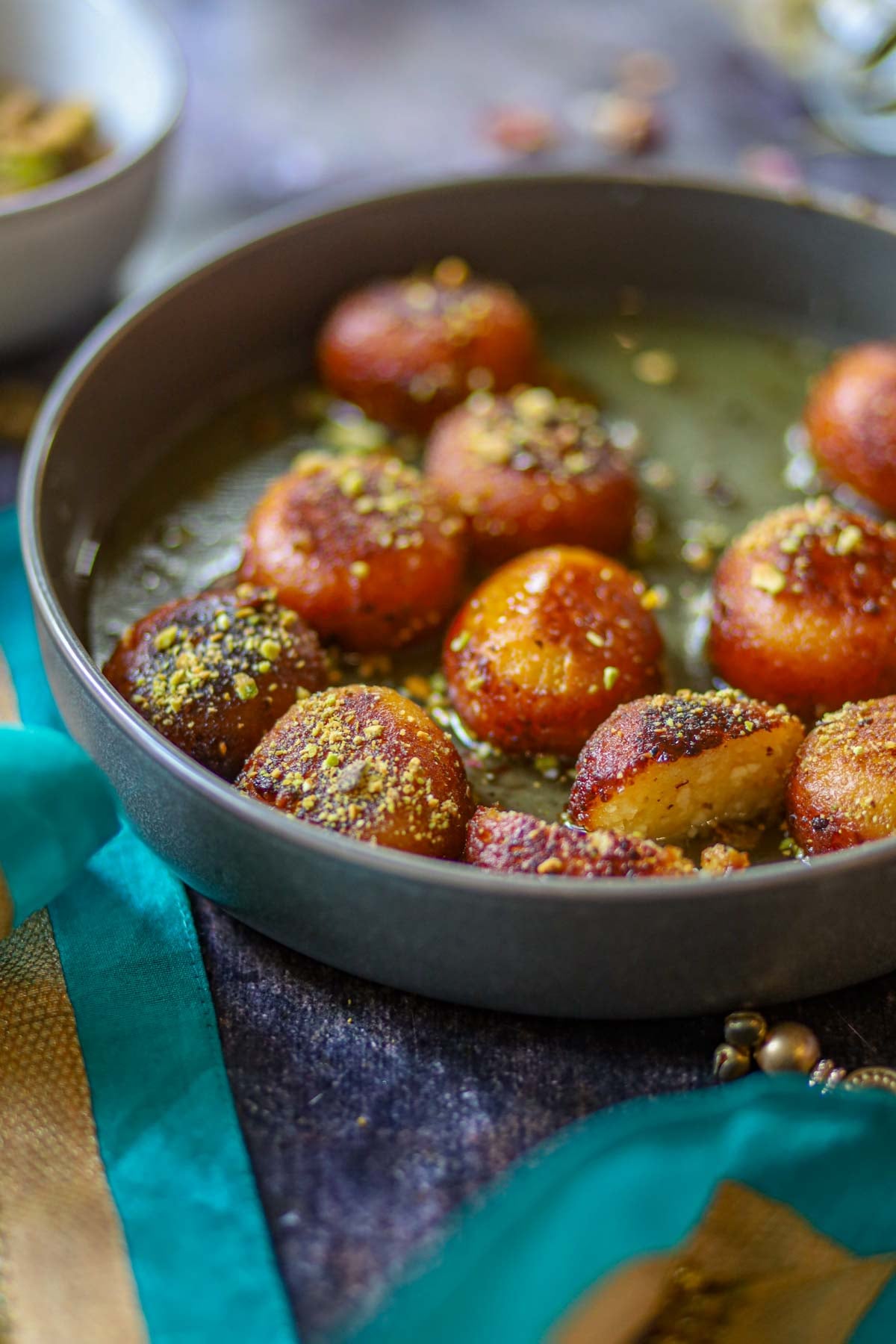
The biggest difference in getting soft gulab jamun isn't complicated ingredients-it's the dough texture, the frying temperature, and the syrup temperature.
I make the dough with khoya, flour, baking powder, and cardamom, then fry the balls slowly over low heat for about 6-8 minutes. As soon as they come out of the oil, I transfer them directly into warm - not hot - sugar syrup.
That combination gives the jamun time to cook through without burning outside and helps them absorb the syrup without breaking.
Jump to:
- Why You'll Love This Recipe
- What Is Gulab Jamun?
- Ingredient Notes
- How to Make Gulab Jamun with Khoya
- HELPFUL TIPS
- Why Did My Gulab Jamun Turn Hard?
- Why Do Gulab Jamun Break While Frying?
- Why Do Gulab Jamun Break in Sugar Syrup?
- Best Temperature for Frying Gulab Jamun
- How Do You Know Gulab Jamun Is Cooked?
- How Thick Should the Sugar Syrup Be?
- How Long Should Gulab Jamun Soak?
- Serving Suggestions
- Make Ahead
- Storage
- How to Reheat Gulab Jamun
- Frequently Asked Questions
- More Indian Desserts
- Gulab Jamun with Khoya
Why You'll Love This Recipe
- Made with khoya: This version uses the traditional milk-solid base instead of milk powder.
- Soft texture: Keeping the dough soft helps prevent dense or hard gulab jamun.
- Slow frying: Frying on low heat gives the center enough time to cook.
- Simple syrup: The syrup only needs a short 5-minute boil.
- Festival-friendly: Perfect for Diwali, Holi, parties, or Indian dessert spreads.
- Make-ahead friendly: Gulab jamun actually benefit from resting in the syrup before serving.
What Is Gulab Jamun?
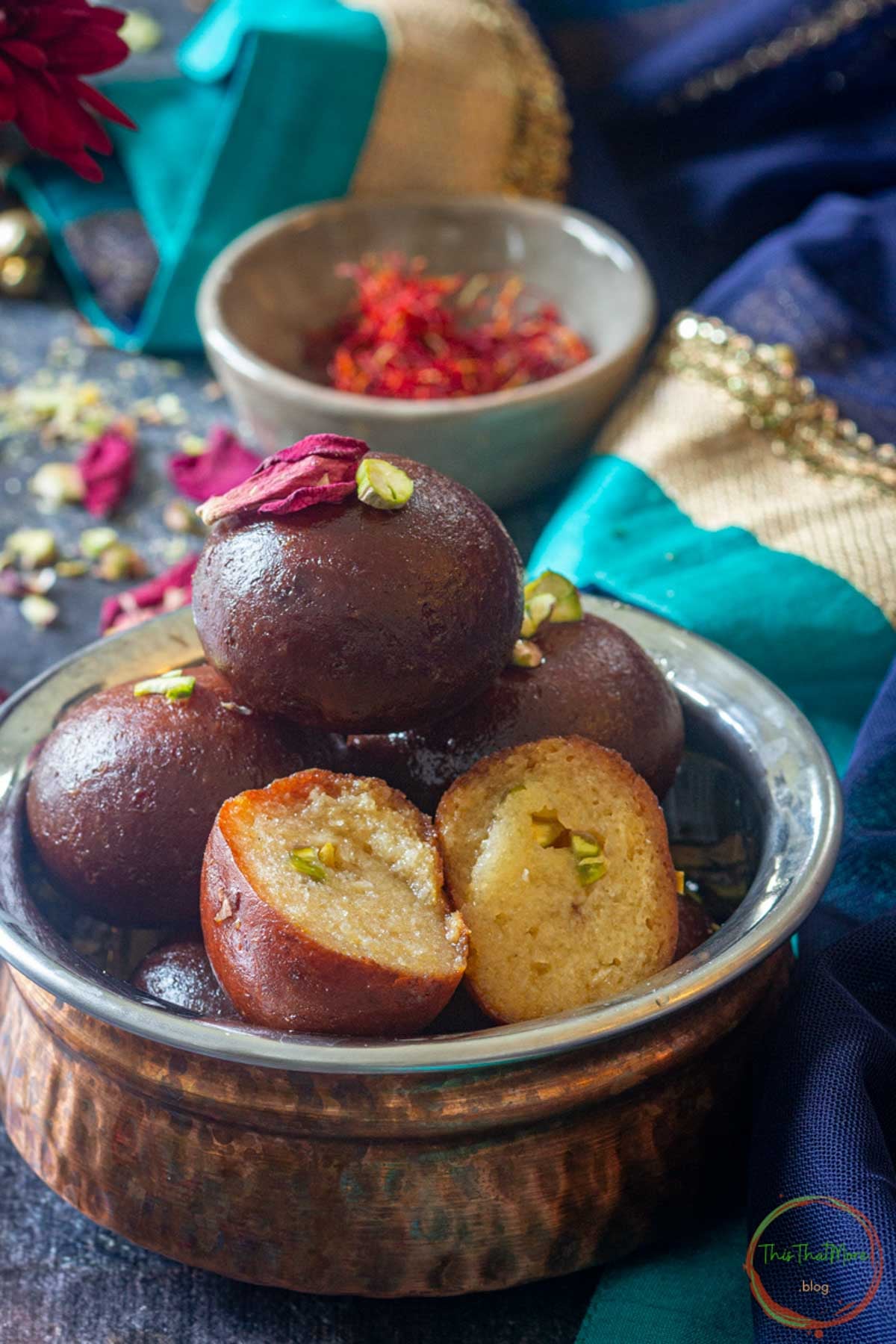
Gulab jamun is a classic Indian dessert made from soft milk-solid dough that is shaped into small balls, fried, and soaked in fragrant sugar syrup.
Traditional versions are commonly made with khoya or mawa, which gives the jamun a rich flavor and soft interior.
After frying, soak the balls in warm sugar syrup flavored with cardamom and rose water.
Ingredient Notes
- Khoya: Use soft khoya and smooth it well before mixing. Any lumps in the khoya can make shaping harder and affect the final texture.
- All-purpose flour: I use ¼ cup flour to help bind the khoya without making the dough too firm.
- Baking powder: Just ⅛ teaspoon is enough. Too much leavening can cause the balls to expand too quickly or crack.
- Cardamom powder: I add ¼ teaspoon directly to the dough for a warm aromatic flavor.
- Sugar syrup: Make the syrup with sugar, water, cardamom, rose water, and lemon juice.
- Pistachios: I use chopped pistachios for garnish after the gulab jamun have soaked.
- Oil: Use enough oil for deep frying and keep the heat low throughout.
How to Make Gulab Jamun with Khoya
1. Smooth the Khoya
Add 1 cup khoya to a bowl.
Use your fingers or the back of a spoon to smooth it until there are no large lumps.
This step matters because a smooth khoya mixture makes it much easier to form smooth balls without cracks.
2. Make the Dough
Add:
- ¼ cup all-purpose flour
- ⅛ teaspoon baking powder
- ¼ teaspoon cardamom powder
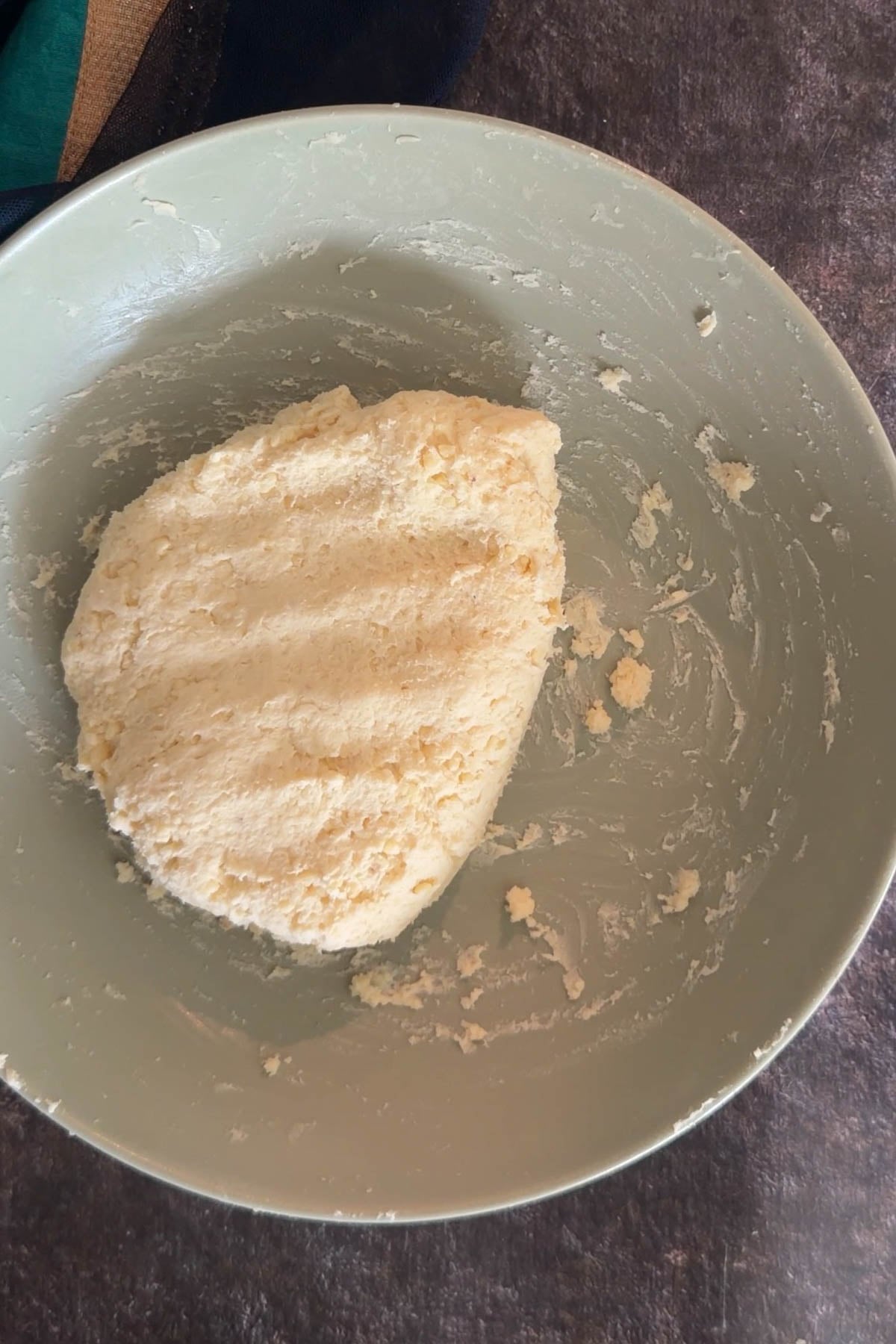
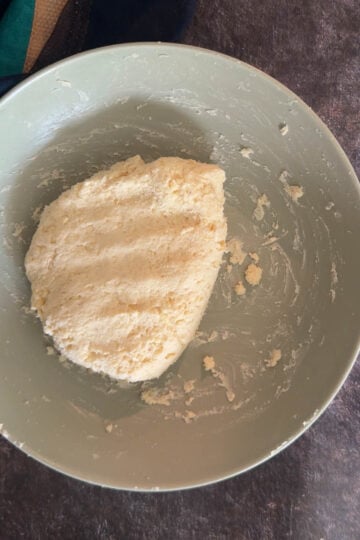
Combine everything gently. The dough should be soft and smooth, not stiff or hard. Do not overwork it. Mix only until everything comes together. If the dough feels hard at this stage, the finished gulab jamun can also turn out firm.
3. Shape the Gulab Jamun
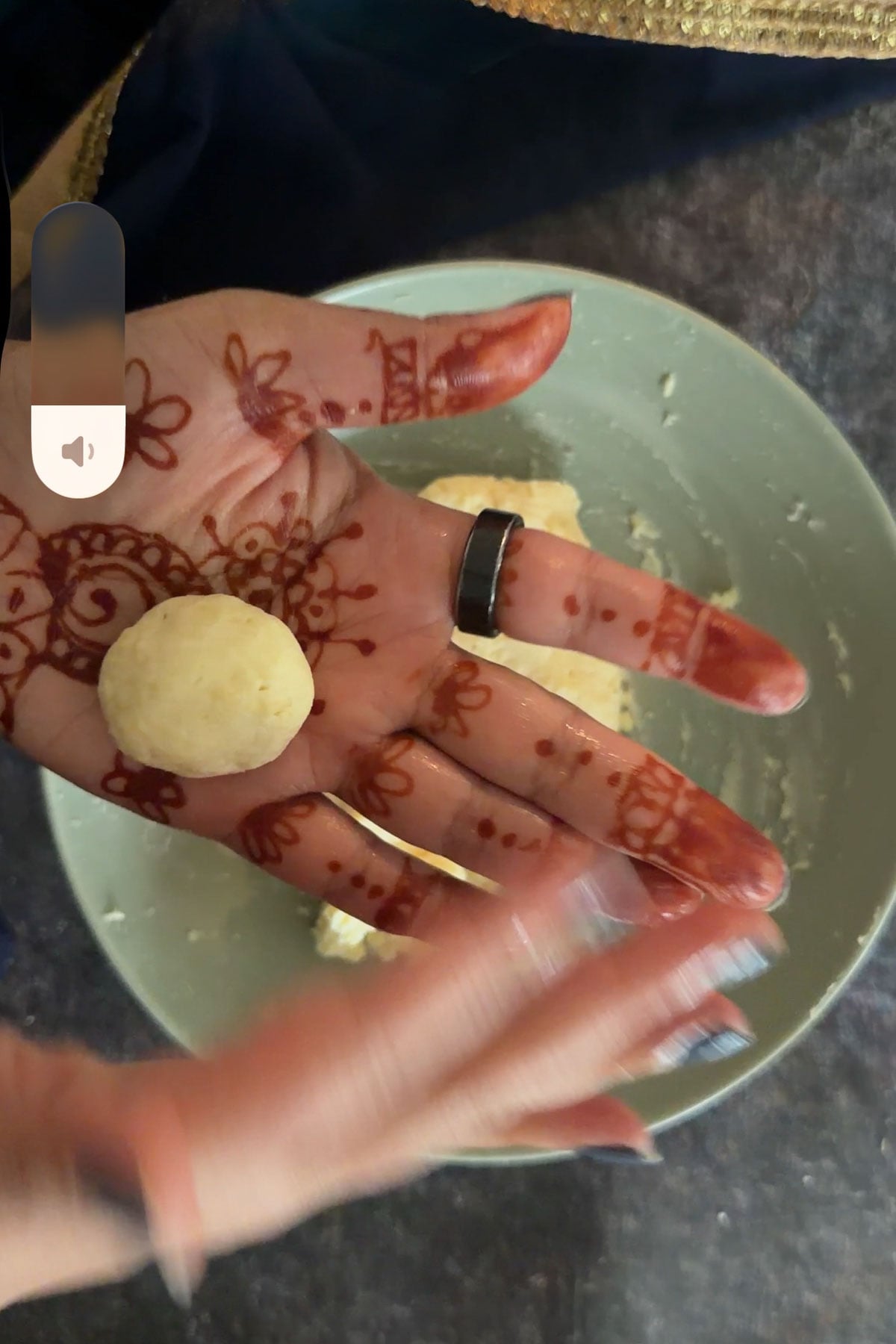
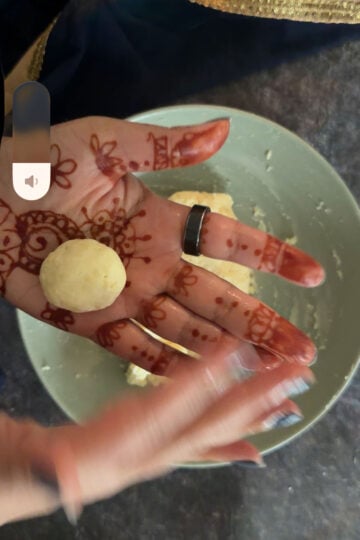
Take small portions of dough and gently roll them between your palms.
The balls should be:
- smooth
- crack-free
- evenly sized
- shaped without pressing too firmly
Do not compact the dough aggressively while rolling.
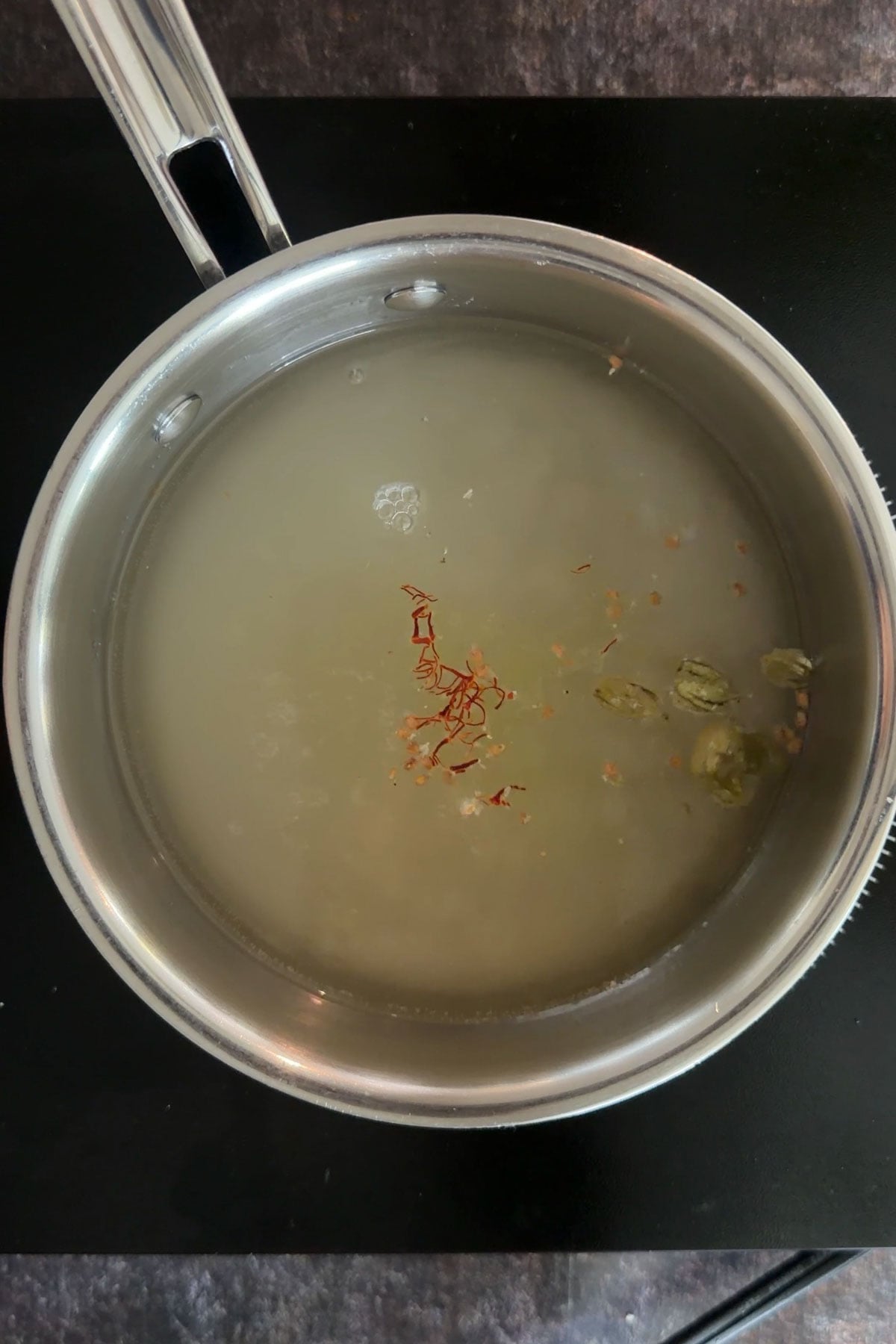
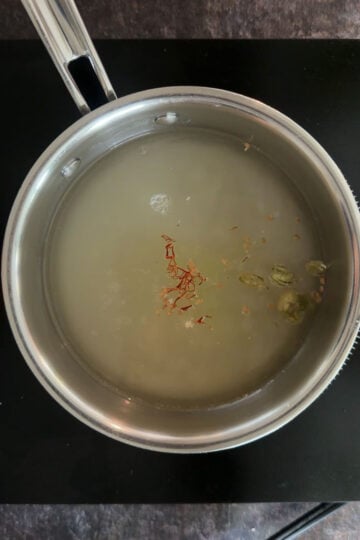
4. Prepare the Sugar Syrup
Add the sugar, water, cardamom pods, and rose water to a saucepan.
Bring the syrup to a boil over medium heat. Once it boils, add the lemon juice and let it boil for about 5 minutes. Turn off the heat.
Let the syrup cool slightly until it is warm, not hot. Do not cook it until it reaches a string consistency. You want a light syrup that the gulab jamun can absorb easily.
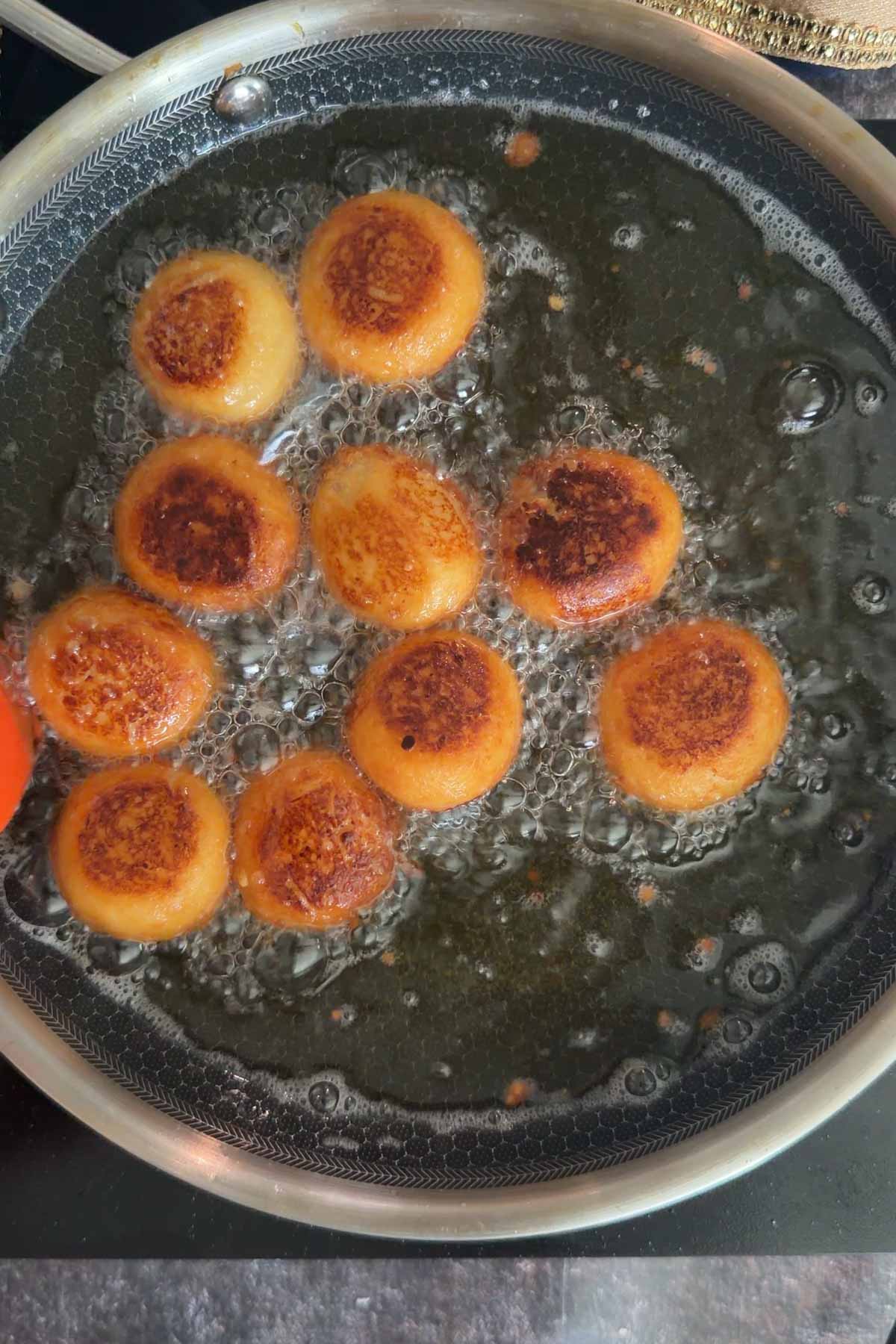
5. Heat the Oil
Heat the frying oil over low heat. Do not rush this step by turning the heat up.
The gulab jamun need time to cook gradually from the inside while the outside slowly browns.
6. Fry Slowly
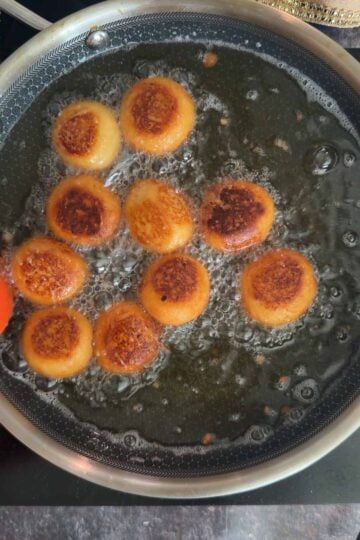
Carefully add the dough balls to the oil without overcrowding the pan. Fry over low heat for about 6-8 minutes, turning them gently so they brown evenly.
They should gradually become golden brown. If they brown very quickly, your oil is too hot.
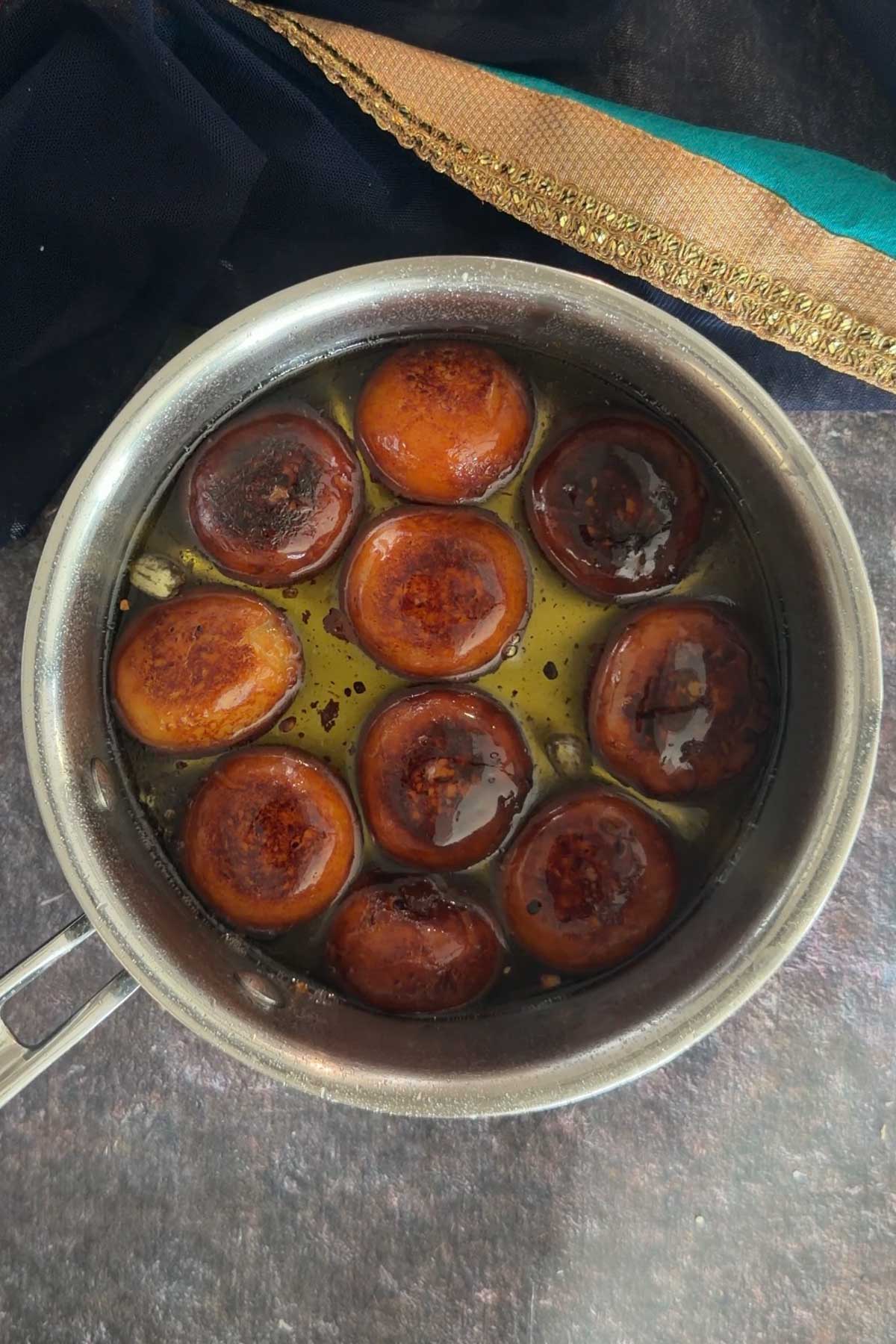
7. Transfer Directly to Warm Syrup
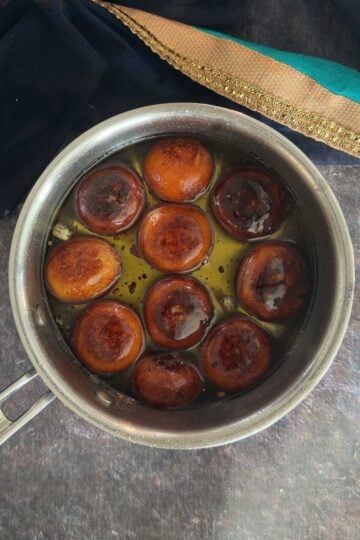
As soon as the gulab jamun come out of the oil, transfer them into the warm sugar syrup.
The syrup should not be piping hot.
Very hot syrup can make delicate gulab jamun break, while overly cool syrup may not absorb as well.
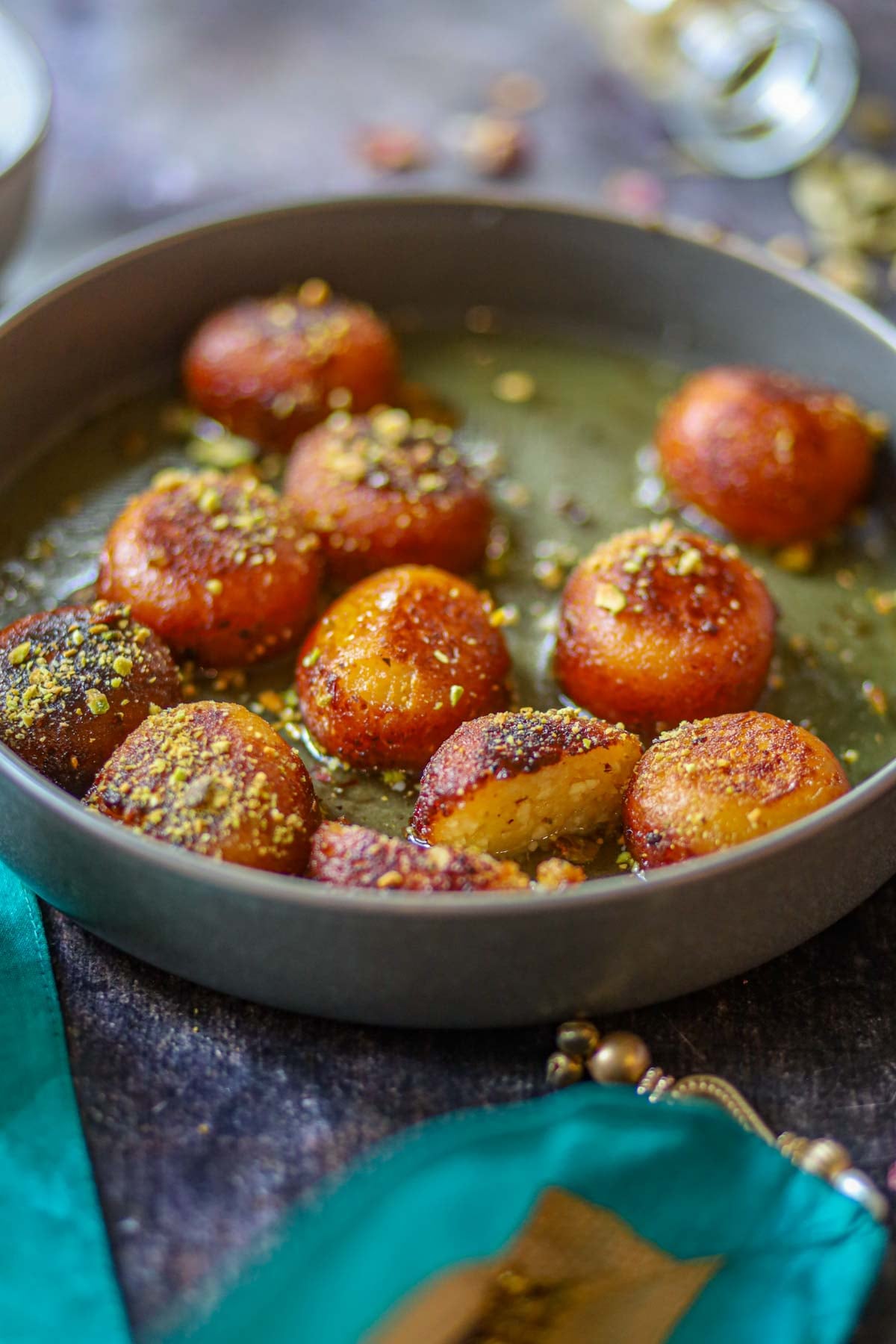
8. Let Them Soak
Allow the gulab jamun to sit in the syrup until they soften and absorb the flavor.
Garnish with chopped pistachios before serving.
HELPFUL TIPS
These are the things that make the biggest difference for me:
- Smooth the khoya well. Lumpy khoya makes it harder to create a soft, even dough.
- Keep the dough soft. A firm dough usually produces firmer gulab jamun.
- Do not add too much flour. Flour helps bind the dough, but too much can make the jamun dense.
- Do not over-knead. Mix only until the dough comes together.
- Shape gently. Pressing too hard can compact the dough.
- Fry on low heat. This gives the inside time to cook before the outside becomes too dark.
- Use warm syrup. Hot syrup can make freshly fried jamun fragile and more likely to break.
- Give them time to soak. The texture improves as they absorb the syrup.
Why Did My Gulab Jamun Turn Hard?
The most common cause is a dough that is too firm.
- Too much flour can make the dough dense.
- Dry or crumbly khoya can make the mixture harder to shape.
- Over-kneading can compact the dough.
- Frying too quickly can brown the outside before the inside cooks properly.
Your dough should feel soft enough to roll without cracking.
If the shaped balls already feel hard and dense before frying, the final gulab jamun are unlikely to become soft just from soaking.
Why Do Gulab Jamun Break While Frying?
A few things can cause them to break:
- dough is too soft or wet
- balls have cracks
- too much baking powder
- oil temperature is too high
- balls were handled too aggressively
Shape smooth balls and keep the oil on low heat.
Why Do Gulab Jamun Break in Sugar Syrup?
The temperature of the syrup matters.
Freshly fried gulab jamun are delicate.
- Do not drop them into boiling-hot syrup.
- Let the syrup cool until warm.
- Transfer the fried balls directly into the warm syrup.
- Handle them gently while they begin soaking.
Best Temperature for Frying Gulab Jamun
I prefer frying entirely over low heat. The balls take roughly 6-8 minutes to fry.
You want gradual browning rather than instant color.
If the outside turns dark in the first couple of minutes, the oil is too hot.
How Do You Know Gulab Jamun Is Cooked?
Look for:
- even golden-brown color
- gradual browning rather than sudden darkening
- balls that feel cooked through rather than soft and raw in the center
- roughly 6-8 minutes of slow frying
Color alone is not enough. Low heat gives the center time to cook properly.
How Thick Should the Sugar Syrup Be?
The syrup should remain relatively light.
You do not want one-string consistency for gulab jamun. Once the syrup comes to a boil, I simmer it for about 5 minutes and then turn off the heat.
It will thicken slightly as it cools, but it should still be fluid enough for the jamun to absorb.
How Long Should Gulab Jamun Soak?
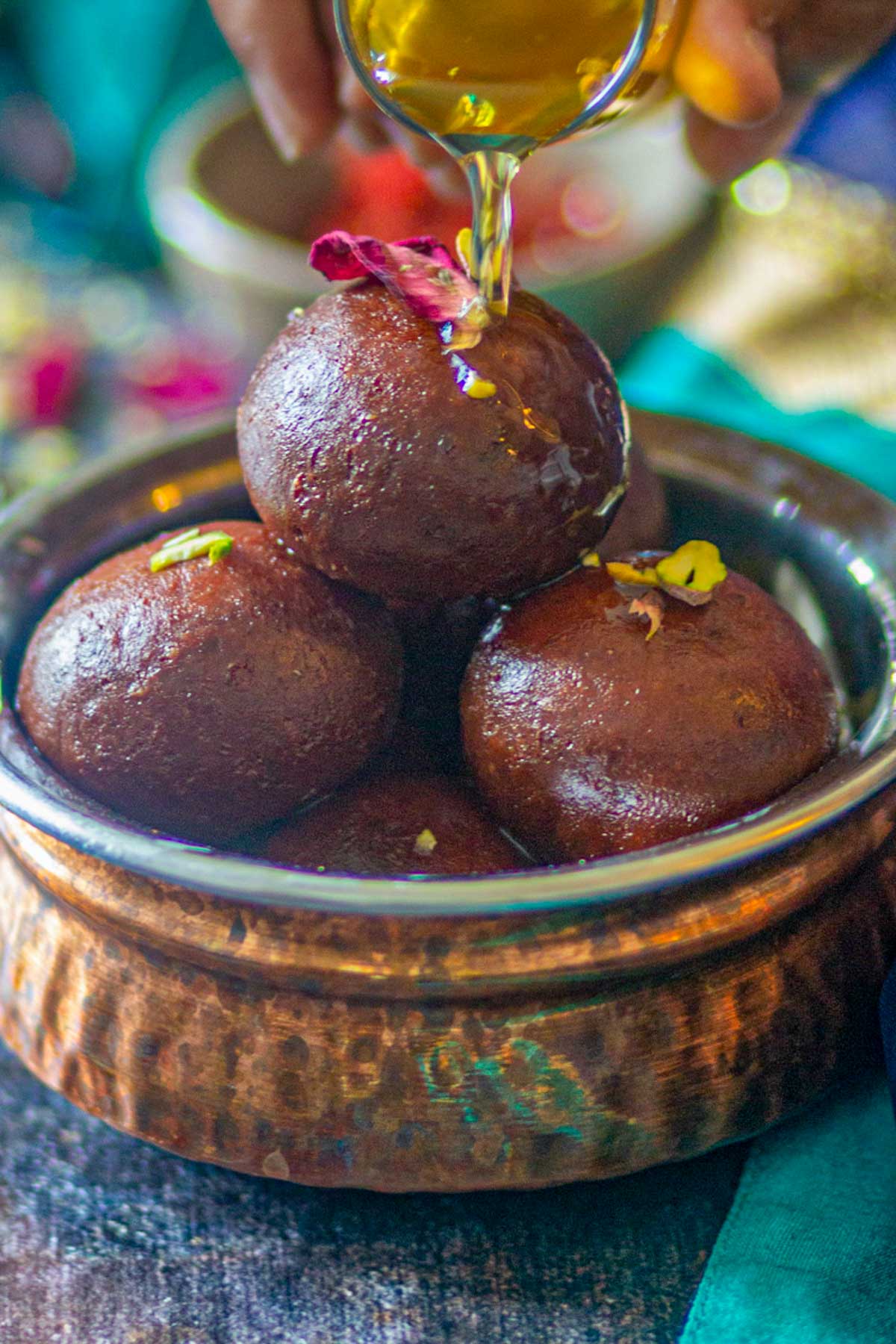
Soak for at least 2 hours before serving; longer is even better if you have time. The jamun will gradually absorb the syrup and soften.
Serving Suggestions
- Serve warm or at room temperature.
- Spoon a little extra syrup over each serving.
- Garnish with chopped pistachios.
- Add a few saffron strands if desired.
- Serve with vanilla ice cream for a warm-and-cold dessert.
- Add them to a Diwali dessert platter with ladoo, kaju katli, or gajar halwa.
Make Ahead
Gulab jamun are a good make-ahead dessert because they need time to absorb the syrup.
You can prepare them earlier in the day or the day before your gathering and keep them stored in the syrup.
Storage
- Store gulab jamun submerged in their syrup.
- Keep them in an airtight container in the refrigerator.
- Bring them closer to room temperature or warm gently before serving.
- Do not repeatedly boil the syrup when reheating.
How to Reheat Gulab Jamun
Warm only until the syrup and jamun are pleasantly warm.
Avoid overheating, as repeated boiling can thicken the syrup too much and change the jamun's texture.
Frequently Asked Questions
You can, but this particular recipe is specifically developed around khoya.
I prefer keeping this version focused on khoya rather than trying to make one recipe work equally well with two different dough bases.
The oil was likely too hot.
When gulab jamun brown very quickly, the outside cooks before the center has enough time.
Keep the heat low and fry slowly.
The dough may be too dry, or you may have shaped the balls too firmly.
A soft dough should roll smoothly without visible cracks.
A small amount of lemon juice is already part of your existing syrup recipe and helps keep the syrup from crystallizing as easily.
More Indian Desserts
- Sabudana Kheer Recipe
- PEANUT CHIKKI RECIPE (TRADITIONAL PEANUT GAJAK)
- CARROT HALWA WITH KHOYA
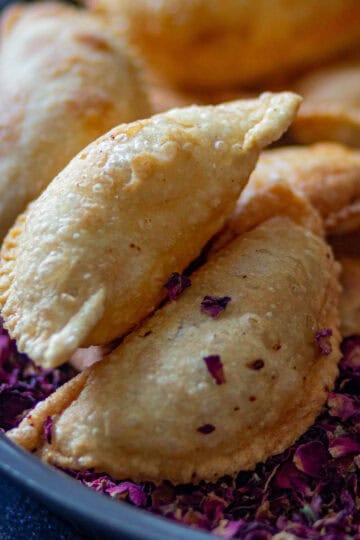
- GUJIYA RECIPE
Tried this Khoya Gulab Jamun? Leave a comment below and let me know how the texture turned out, especially whether you got that soft center after slow frying.
Gulab Jamun with Khoya
Ingredients
Equipment
Method
- Smooth the khoya: Add the khoya to a mixing bowl and mash or rub it until smooth and free of large lumps.
- Make the sugar syrup: Add sugar, water, cardamom pods, and saffron to a saucepan. Bring to a boil, then simmer for about 5 minutes.1.5 cups Water, 1.5 cups Sugar, 4 pods Cardamoms, few strands Saffron

- Finish the syrup: Add the rose water and lemon juice. Turn off the heat and allow the syrup to cool slightly until it is warm, not piping hot.1 teaspoon Rose Water, 1 teaspoon Lemon Juice
- Make the dough: Add the flour, baking powder, and cardamom powder. Gently combine the ingredients.1 cup Khoya, ¼ cup All-Purpose Flour, ¼ teaspoon Cardamom Powder, ⅛ teaspoon Baking Soda
- Add milk gradually: Add a little milk at a time and knead until you form a soft dough.¼ cup Milk
- Shape the balls: Divide the dough into small, equal portions. Gently roll each portion between your palms into a smooth, crack-free ball.
- Heat the oil: Heat enough oil for deep frying over low heat.Oil
- Fry slowly: Carefully add the gulab jamun and fry over low heat for about 6-8 minutes, turning gently so they brown evenly.
- Transfer to syrup: Remove the fried gulab jamun from the oil and immediately place them into the warm sugar syrup.
- Soak: Let them soak for at least 30-40 minutes, or longer if time allows, so they absorb the syrup and soften.
- Serve: Garnish with chopped pistachios and serve warm or at room temperature.
Nutrition
Notes
- Smooth the khoya well: Lumps can make the dough uneven and harder to shape.
- Keep the dough soft: A hard dough can result in dense or firm gulab jamun.
- Do not over-knead: Mix only until the dough comes together.
- Shape gently: The balls should be smooth and crack-free without being tightly compressed.
- Fry only on low heat: Mine take about 6-8 minutes. Fast browning means the oil is too hot.
- Do not overcook the syrup: About 5 minutes of simmering is enough; you do not want a thick one-string syrup.
- Let the syrup cool to warm: Very hot syrup can make freshly fried gulab jamun fragile and more likely to break.
- Transfer them straight from the oil to the warm syrup: This helps them begin absorbing syrup immediately.
- Give them time to soak: At least 30-40 minutes gives a much softer center.
- Store in syrup: Keep leftover gulab jamun submerged in the syrup so they stay moist.
Tried this recipe?
Let us know how it was!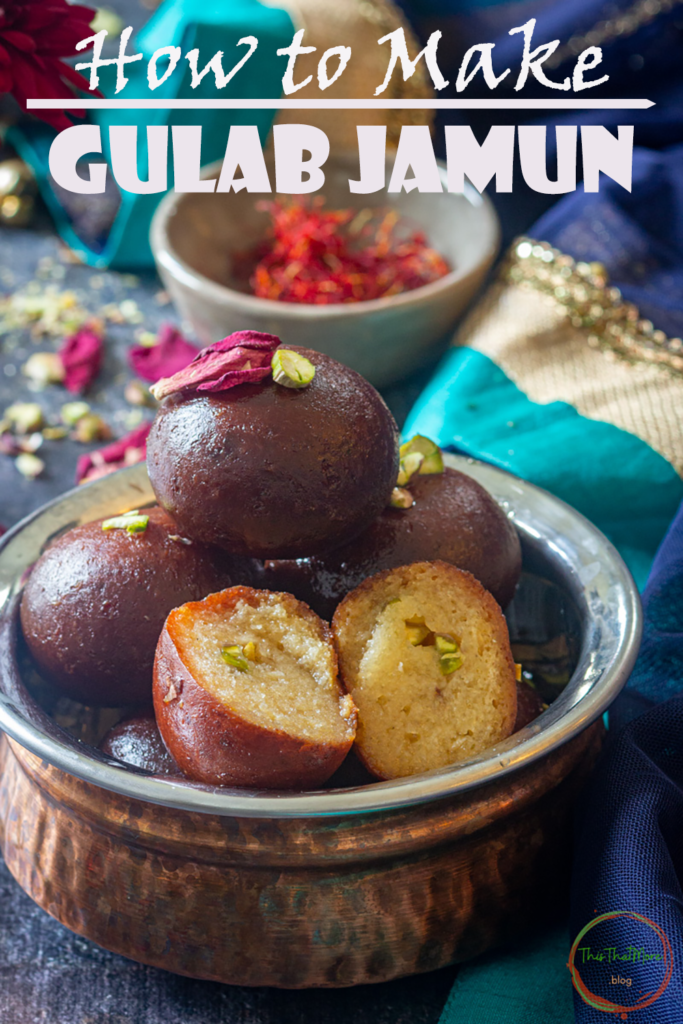


Leave a Reply