
Eggless baking for beginners can feel overwhelming at first, especially when eggs play such an important role in cakes, cookies, brownies, and muffins. The good news is that baking without eggs is much easier once you understand which substitutes work best for different recipes. In this guide, you'll learn the best egg substitutes, common baking mistakes to avoid, and simple tips to create soft, fluffy, and delicious eggless desserts every time.
The good news is that yes, you can bake delicious cakes, cookies, muffins, brownies, and breads without eggs. The secret is choosing the right egg substitute for the right recipe.
This beginner-friendly guide will walk you through everything you need to know about eggless baking, including why eggs matter, the best egg substitutes, how to avoid common eggless baking mistakes, and how to get soft, fluffy, moist results every time.
Quick Summary
- Eggless baking becomes much easier when you understand what eggs do in different recipes and choose the right substitute.
- Yogurt, vinegar with baking soda, applesauce, and flax eggs are some of the best beginner-friendly egg substitutes for baking.
- The most common eggless baking mistakes are overmixing, using the wrong substitute, and adding too much moisture.
- For soft, fluffy, eggless cakes, use fresh leavening agents, room-temperature ingredients, and avoid overbaking.
- Different recipes need different substitutes - what works for cookies may not work for cakes or brownies.
Can You Bake Successfully Without Eggs?
Yes, you can absolutely bake cakes, cookies, brownies, muffins, and other desserts without eggs by using the right substitutes. Ingredients like yogurt, vinegar with baking soda, applesauce, flax eggs, and mashed banana can replace the moisture, binding, and structure that eggs normally provide in baking. The key is choosing the best egg substitute based on the type of recipe you are making.
Jump to:
- Quick Summary
- Can You Bake Successfully Without Eggs?
- Quick Answer: What Is Eggless Baking and How Does It Work?
- Why Eggs Matter in Baking
- Pro Tip
- 9 Best Egg Substitutes for Baking Without Eggs Successfully
- Which Egg Substitute Works Best for Cakes, Cookies, and Brownies?
- Egg Substitute Chart
- 6 Common Eggless Baking Mistakes That Ruin Texture
- Troubleshooting
- Best fix:
- 7 Simple Tips for Soft, Fluffy Eggless Cakes Every Time
- Easy Eggless Recipes Beginners Can Successfully Make First
- Eggless Baking for Allergies: Important Safety Notes
- Eggless vs Vegan Baking: What's the Real Difference?
- Can You Convert Any Recipe to Eggless?
- How to Choose the Best Egg Substitute for Any Recipe
- Frequently Asked Questions
Quick Answer: What Is Eggless Baking and How Does It Work?
Eggless baking for beginners becomes much easier once you understand how different egg substitutes affect texture, moisture, and structure. Instead of eggs, you use ingredients like yogurt, applesauce, mashed banana, flaxseed, chia seeds, vinegar, baking soda, aquafaba, or commercial egg replacers to provide moisture, structure, binding, or lift.
Eggless baking is popular among people with egg allergies, vegetarians, vegans, and anyone who wants to bake when they do not have eggs at home.
Quick summary:
For cakes, yogurt, baking soda, and vinegar, or buttermilk-style substitutes work well. For cookies, flax eggs, chia eggs, or applesauce are useful. For brownies, yogurt, silken tofu, or flax eggs can help create a fudgy texture.
Why Eggs Matter in Baking
Learning how to replace eggs in baking becomes easier once you understand that eggs provide structure, moisture, and lift.
- Eggs Help Bind Ingredients: Eggs hold ingredients together. This is especially important in cookies, brownies, muffins, and quick breads. Without a binder, baked goods can become crumbly or fall apart.
- Eggs Add Moisture: Eggs contain liquid, so they help keep baked goods soft and moist. When baking without eggs, you often need another moist ingredient such as yogurt, applesauce, banana, or buttermilk.
- Eggs Create Structure: As eggs bake, their proteins set and help give cakes, muffins, and breads their shape. Without enough structure, eggless cakes may sink, collapse, or turn gummy.
- Eggs Help with Rise: Eggs can trap air and help baked goods rise. In eggless baking, ingredients like baking powder, baking soda, vinegar, lemon juice, or carbonated water can help create lift.
- Eggs Improve Texture: Eggs can make cakes tender, cookies chewy, and brownies rich. Eggless baking is about replacing those functions, not simply removing eggs.
Understanding whether eggs act as binders, leaveners, or moisture sources makes choosing substitutes much easier.
Pro Tip
The biggest beginner mistake is using one egg substitute for every recipe. The best substitute depends on what the egg is doing in that specific recipe.
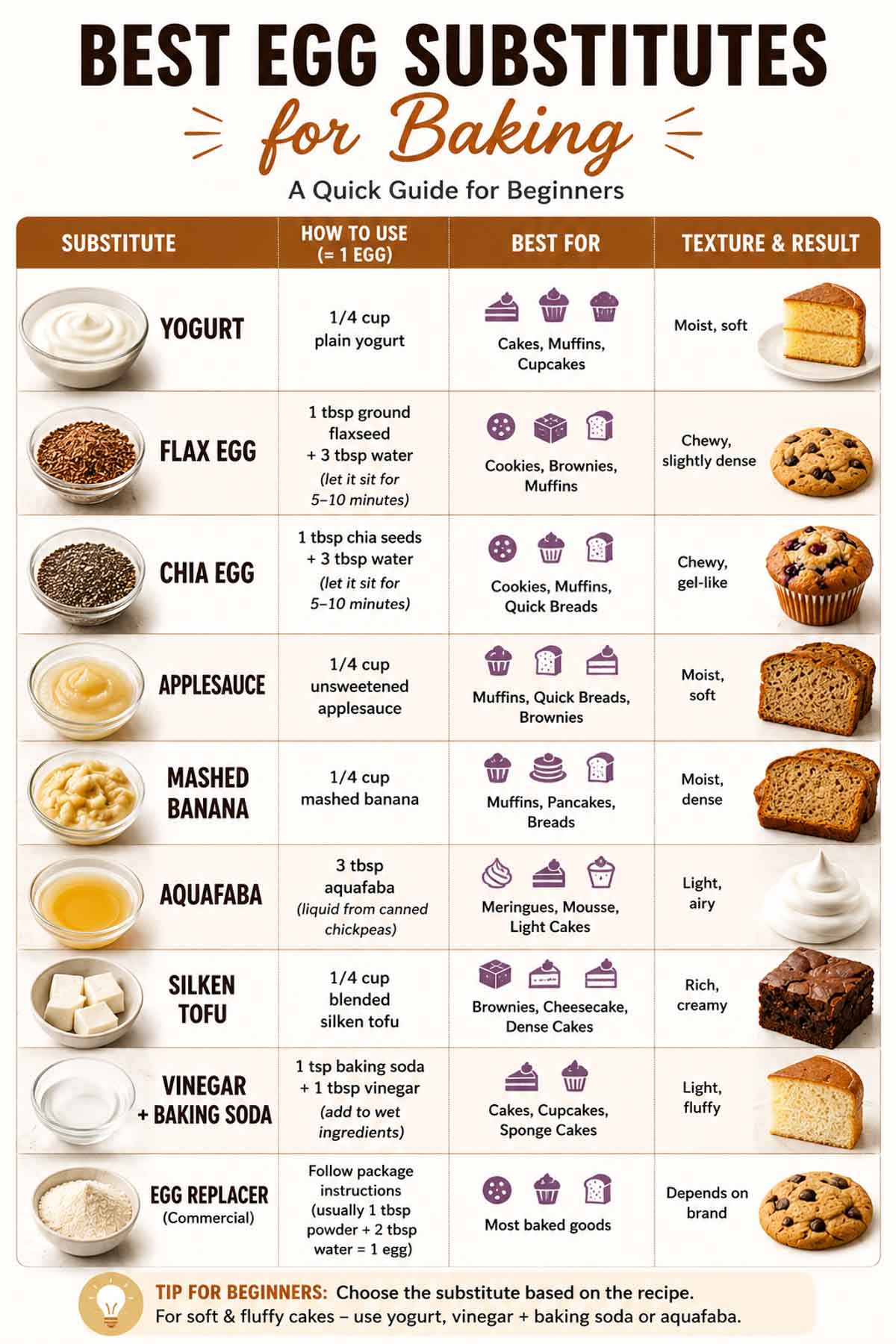
9 Best Egg Substitutes for Baking Without Eggs Successfully
One of the most important parts of eggless baking for beginners is learning which substitutes work best for cakes, cookies, brownies, and muffins.
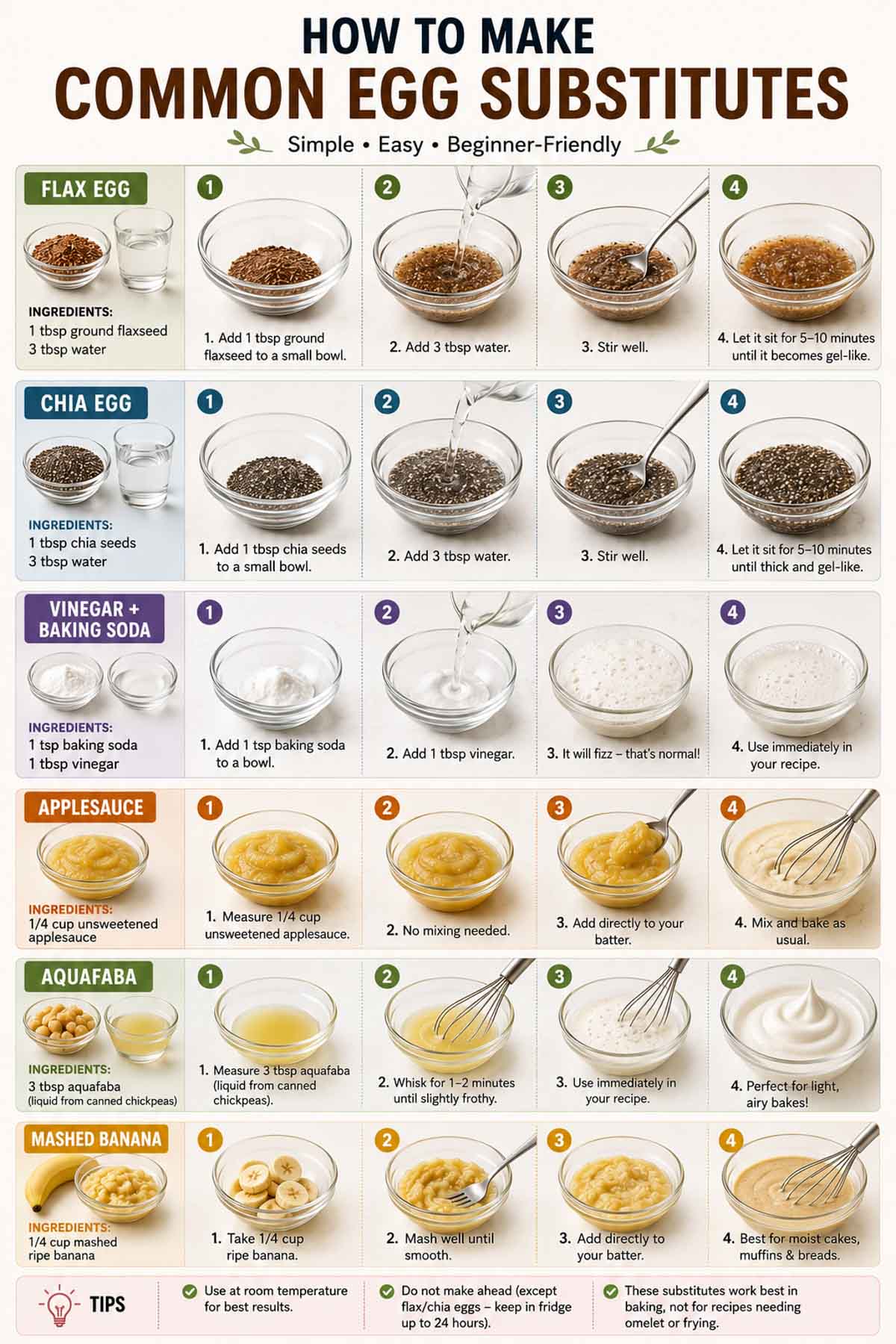
1. Yogurt
Yogurt is one of the easiest egg substitutes for beginners.
Best for: cakes, muffins, cupcakes, quick breads
Texture: soft, moist, tender
Use: about ¼ cup of yogurt to replace 1 egg
Yogurt works especially well as a substitute in cake recipes because it adds moisture and tenderness. Plain yogurt is best because flavored yogurt can change the taste.
Use regular yogurt for soft cakes. Greek yogurt is thicker, so you may need to thin it slightly with milk or water.
2. Vinegar and Baking Soda
Vinegar and baking soda are a classic combination for fluffy eggless cakes.
Best for: sponge cakes, vanilla cakes, chocolate cakes, cupcakes
Texture: light and airy
Use: 1 teaspoon baking soda + 1 tablespoon vinegar can help replace lift in some recipes
When vinegar reacts with baking soda, it creates bubbles that help the batter rise. This is why many eggless cake recipes use vinegar, lemon juice, or buttermilk.
Do not worry-the cake will not taste like vinegar when used correctly.
3. Applesauce
Applesauce adds moisture and mild sweetness.
Best for: muffins, quick breads, snack cakes, brownies
Texture: moist and soft
Use: ¼ cup unsweetened applesauce to replace 1 egg
Applesauce is great for recipes where a little extra moisture is helpful. However, too much applesauce can make cakes dense or gummy.
Use unsweetened applesauce when possible so the recipe does not become too sweet.
4. Mashed Banana
Mashed banana is a simple and natural egg substitute.
Best for: banana bread, muffins, pancakes, breakfast cakes
Texture: moist and dense
Use: ¼ cup mashed banana to replace 1 egg
Banana works well when its flavor matches the recipe. It is not ideal for delicate vanilla cakes because the banana taste can be strong.
5. Flax Egg
A flax egg is made by mixing ground flaxseed with water.
Best for: cookies, brownies, muffins, pancakes
Texture: chewy, slightly dense
Use: 1 tablespoon ground flaxseed + 3 tablespoons water = 1 flax egg
Let the mixture sit for 5-10 minutes until it becomes gel-like.
Flax eggs are great for recipes that need binding. They are not the best choice for light, fluffy cakes because they can make the texture heavier.
6. Chia Egg
A chia egg works like a flax egg but has a slightly stronger gel texture.
Best for: cookies, muffins, quick breads
Texture: chewy and slightly dense
Use: 1 tablespoon chia seeds + 3 tablespoons water = 1 chia egg
Chia eggs are useful for binding but can leave tiny visible seeds in lighter baked goods.
7. Aquafaba
Aquafaba is the liquid from a can of chickpeas.
Best for: meringues, macarons, mousse, light cakes
Texture: airy and light
Use: 3 tablespoons aquafaba to replace 1 egg
Aquafaba can be whipped like egg whites, making it useful for recipes that need air and volume.
It is more advanced than yogurt or applesauce, but it is very useful once you understand how it works.
8. Commercial Egg Replacer
Commercial egg replacers are made specifically to replace eggs in baking.
Best for: cakes, cookies, muffins, pancakes
Texture: depends on the brand
Use: follow package instructions
This is a good option for beginners who want predictable results, especially when baking for allergies.
9. Silken Tofu
Silken tofu adds moisture and structure.
Best for: brownies, dense cakes, cheesecakes, custards
Texture: rich and creamy
Use: ¼ cup blended silken tofu to replace 1 egg
Silken tofu works best in recipes where richness matters more than fluffiness.
Organizations like FARE also provide a helpful egg substitution guide for common baking recipes.
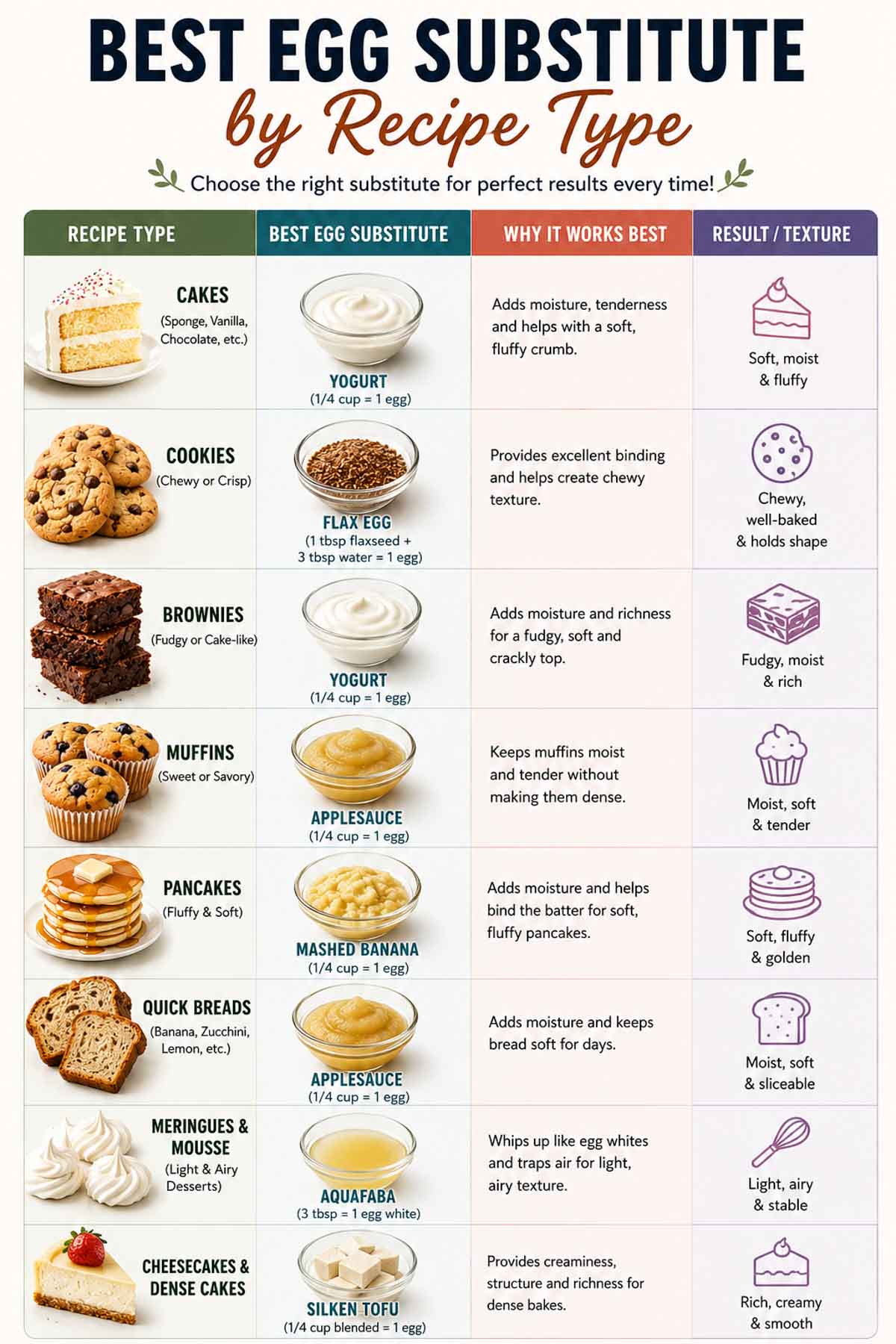
Which Egg Substitute Works Best for Cakes, Cookies, and Brownies?
This is where eggless baking becomes much easier.
Best Egg Substitute for Cakes
For soft eggless cakes, the best options are:
- yogurt
- buttermilk-style mixture
- vinegar and baking soda
- applesauce in small amounts
- commercial egg replacer
If you want a fluffy eggless cake, avoid heavy substitutes like flax eggs unless the recipe is designed for them.
Best beginner choice: yogurt or vinegar with baking soda.
Best Egg Substitute for Cookies
Cookies usually need more binding than rising.
Good options include:
- flax egg
- chia egg
- applesauce
- mashed banana
- commercial egg replacer
Flax eggs work especially well in chewy cookie recipes like these eggless Linzer cookies. For soft cookies, applesauce can help.
Best beginner choice: flax egg.
Best Egg Substitute for Brownies
Brownies need moisture, richness, and binding.
Good options include:
- yogurt
- silken tofu
- flax egg
- applesauce
- mashed banana
For fudgy brownies, yogurt or silken tofu works well. For denser brownies, flax eggs are a good choice.
Best beginner choice: yogurt.
Best Egg Substitute for Muffins
Muffins are forgiving, which makes them perfect for beginners. Moisture-rich ingredients are especially helpful when making soft pumpkin muffins and other tender baked goods.
Good options include:
- yogurt
- applesauce
- mashed banana
- flax egg
- chia egg
Best beginner choice: applesauce or yogurt.
Best Egg Substitute for Pancakes
Pancakes need moisture and lightness.
Good options include:
- mashed banana
- yogurt
- applesauce
- carbonated water
- flax egg
Best beginner choice: mashed banana or yogurt.
Egg Substitute Chart
| Egg Substitute | Best For | Texture | Beginner Friendly? |
|---|---|---|---|
| Yogurt | Cakes, muffins, brownies | Moist and tender | Yes |
| Vinegar + baking soda | Cakes, cupcakes | Light and fluffy | Yes |
| Applesauce | Muffins, quick breads | Moist and soft | Yes |
| Banana | Muffins, pancakes | Moist and dense | Yes |
| Flax egg | Cookies, brownies | Chewy and dense | Yes |
| Chia egg | Cookies, muffins | Chewy and gel-like | Medium |
| Aquafaba | Meringues, mousse | Light and airy | Medium |
| Silken tofu | Brownies, cheesecakes | Rich and dense | Medium |
| Egg replacer | Most baked goods | Varies | Yes |
6 Common Eggless Baking Mistakes That Ruin Texture
- Using the Wrong Substitute: Not every egg substitute works in every recipe. Flax eggs may work beautifully in cookies but make a vanilla cake too dense. For soft, chewy cookies, using the right substitute and avoiding overmixing are extremely important.
- Overmixing the Batter: Eggless batters can be delicate. Overmixing develops too much gluten, which can make cakes rubbery or dense. Mix only until the ingredients are combined.
- Using Too Much Moisture: Many egg substitutes add moisture. If you add too much yogurt, applesauce, or banana, the final texture may become gummy.
- Not Using Enough Leavening: Eggless cakes often need proper leavening from baking powder, baking soda, vinegar, or lemon juice. Make sure your baking powder and baking soda are fresh.
- Opening the Oven Door Too Early: Eggless cakes can collapse if the oven door is opened before the structure sets. Avoid opening the oven during the first 20-25 minutes of baking.
- Cutting the Cake Too Soon: Eggless cakes need time to cool and set. Cutting too early can make the inside look sticky or underbaked.
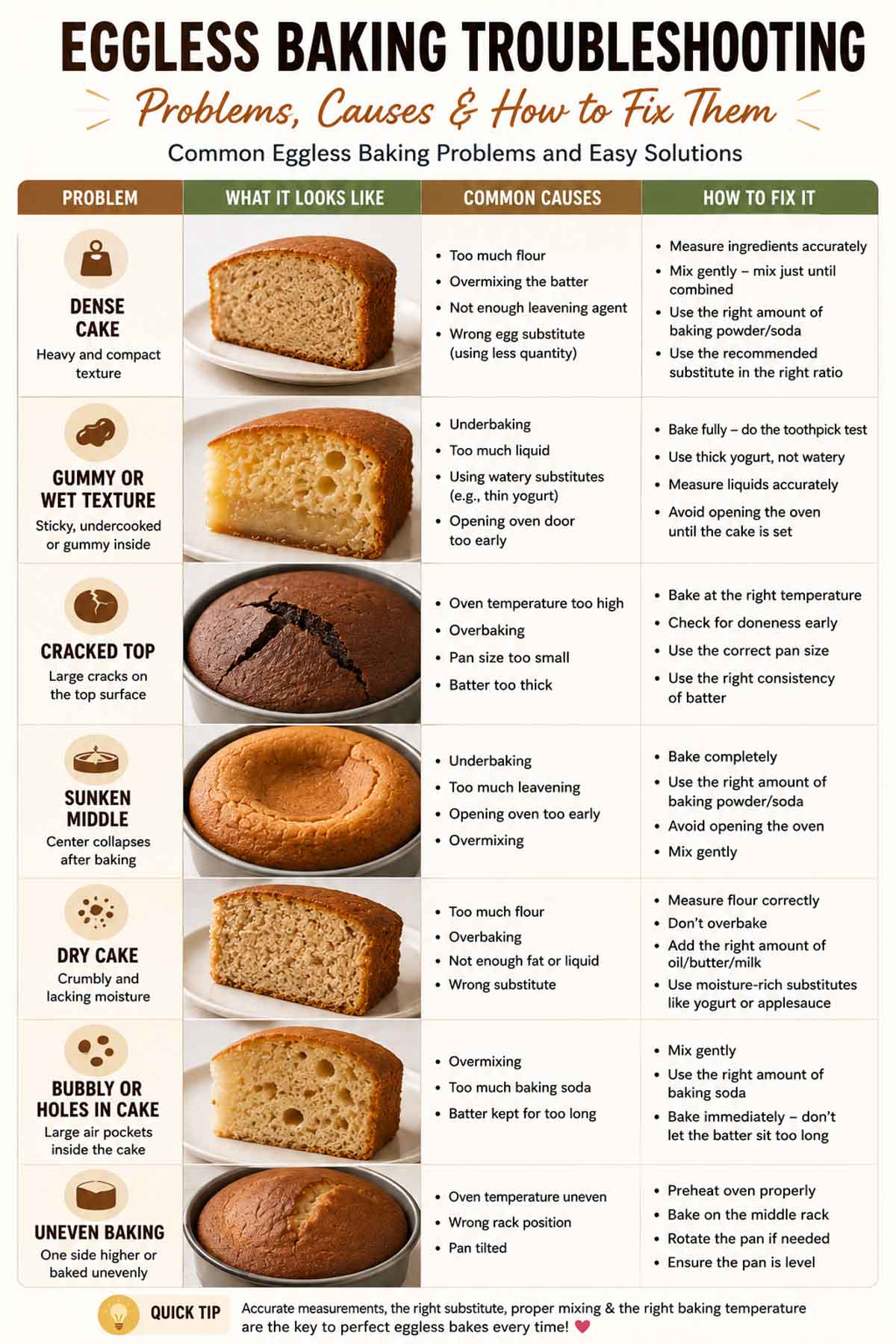
Troubleshooting
Many common problems in eggless baking for beginners, like dense cakes or gummy textures, are usually caused by using the wrong substitute or overmixing the batter.
1. Why Is My Eggless Cake Dense?
Eggless cake becomes dense when there is not enough lift, too much moisture, too much mixing, or the wrong substitute is used.
Common causes include:
- too much yogurt or applesauce
- expired baking powder
- overmixed batter
- oven temperature too low
- not enough acid to activate baking soda
- using flax egg in a light sponge cake
How to fix it:
Use fresh leavening agents, measure ingredients accurately, avoid overmixing, and choose lighter substitutes like yogurt, vinegar, baking soda, or buttermilk for cakes.
2. Why Did My Eggless Cake Sink in the Middle?
An eggless cake may sink if it is underbaked, overmixed, or exposed to cold air too early.
Common reasons:
- opening the oven door too soon
- too much liquid in the batter
- not enough flour or structure
- oven not preheated properly
- removing the cake before the center is fully baked
Quick Fix:
Bake until a toothpick inserted in the center comes out clean or with a few moist crumbs, not wet batter.
3. Why Is My Eggless Cake Dry?
Eggless cakes can become dry when they are overbaked, lack enough fat, or do not include enough moisture-rich ingredients.
To prevent dryness:
- use oil or melted butter
- add yogurt, buttermilk, or applesauce
- do not overbake
- measure flour correctly
- store the cake in an airtight container
Oil often keeps eggless cakes softer for longer than butter.
4. Why Is My Eggless Cake Gummy?
A gummy texture usually means the recipe has too much moisture or not enough structure.
Common causes:
- too much banana or applesauce
- underbaking
- overmixing
- cutting the cake before cooling
- using the wrong flour ratio
Best fix:
Reduce wet ingredients slightly, bake longer if needed, and let the cake cool completely before slicing.
7 Simple Tips for Soft, Fluffy Eggless Cakes Every Time
These simple tips can help anyone learning eggless baking for beginners achieve soft, fluffy, and bakery-style results.
- Use Room Temperature Ingredients: Cold ingredients do not mix as smoothly. Room temperature yogurt, milk, and butter create a better batter.
- Measure Flour Correctly: Too much flour makes baked goods dry and dense. Spoon flour into the measuring cup and level it off, or use a kitchen scale.
- Sift Dry Ingredients: Sifting flour, cocoa powder, baking powder, and baking soda helps prevent lumps and creates a lighter texture.
- Do Not Overmix: Mix just until the batter comes together. Overmixing is one of the biggest reasons eggless cakes become tough.
- Use Fresh Baking Powder and Baking Soda: Expired leavening agents can ruin eggless cakes. If your cakes are not rising, check the freshness of your baking powder and baking soda.
- Preheat the Oven: Eggless cakes need steady heat from the beginning. Always preheat your oven before baking.
- Let Cakes Cool Properly: Cooling helps the crumb set. Let the cake rest in the pan for 10-15 minutes, then move it to a wire rack.
Easy Eggless Recipes Beginners Can Successfully Make First
If you are new to eggless baking, start with simple recipes before attempting layered cakes or advanced desserts.
- Eggless Chocolate Cake: Chocolate cake is one of the easiest eggless cakes because cocoa powder, oil, and acidic ingredients help create a moist texture.
- Eggless Vanilla Cake: Vanilla cake is more delicate, so choose a reliable recipe that uses yogurt, vinegar, or baking soda.
- Eggless Muffins: Muffins are forgiving and work well with applesauce, yogurt, or banana. If you want a beginner-friendly recipe to practice with, these moist eggless chocolate zucchini muffins are a great place to start.
- Eggless Brownies: Brownies are great for beginners because they do not need to rise as much as cakes.
- Eggless Cookies: Cookies are easy to adapt with flax eggs, chia eggs, applesauce, or commercial egg replacers.
Eggless Baking for Allergies: Important Safety Notes
If you are baking for someone with an egg allergy, "eggless" is not always the same as allergy-safe. The FDA's food allergy labeling guidance can help you identify hidden egg ingredients when baking for allergy-sensitive guests.
Check:
- ingredient labels
- cake mixes
- chocolate chips
- frosting
- sprinkles
- commercial egg replacers
- cross-contamination warnings
Use clean utensils, bowls, pans, and surfaces if baking for someone with a serious allergy.
Eggless vs Vegan Baking: What's the Real Difference?
Eggless baking means the recipe does not contain eggs.
Vegan baking means the recipe contains no animal products at all, including eggs, dairy milk, butter, cream, honey, or gelatin.
An eggless cake may still contain milk, butter, yogurt, or condensed milk. A vegan cake must avoid all animal-derived ingredients.
Can You Convert Any Recipe to Eggless?
You can convert many recipes to eggless, but not all recipes are easy to adapt.
Recipes with one or two eggs are usually easier to convert. Recipes that depend heavily on eggs, such as soufflés, angel food cake, sponge cake, custards, and meringues, need more specialized techniques.
For beginners, it is better to start with recipes already designed to be eggless.
How to Choose the Best Egg Substitute for Any Recipe
Ask yourself what the egg is doing in the recipe.
- If the recipe needs moisture: Use yogurt, applesauce, banana, or silken tofu.
- If the recipe needs binding: Use flax egg, chia egg, or commercial egg replacer.
- If the recipe needs lift: Use baking soda with vinegar, lemon juice, buttermilk, or aquafaba.
- If the recipe needs richness: Use yogurt, silken tofu, condensed milk, or nut butter.
Experts recommend choosing egg substitutes based on whether the recipe needs moisture, structure, or lift.
Frequently Asked Questions
For fluffy eggless cakes, vinegar with baking soda, yogurt, buttermilk-style ingredients, or aquafaba usually work better than heavier substitutes like flax eggs or mashed banana.
Milk can add moisture, but it does not fully replace eggs. It does not provide the same binding or structure. Milk works better when combined with other ingredients like vinegar, baking soda, or yogurt.
Eggless cakes are not automatically healthier. It depends on the ingredients used. Some eggless cakes may still contain sugar, butter, oil, or refined flour. However, eggless baking can be helpful for people avoiding eggs due to allergies, dietary choices, or preference.
Eggless cakes become gummy when there is too much moisture, not enough structure, or the cake is underbaked. Too much applesauce, banana, or yogurt can also create a gummy texture.
Yes, but beginners should be careful. Combining substitutes can work well when each one serves a purpose. For example, yogurt can add moisture while baking soda and vinegar add lift.
Final Thoughts
Eggless baking is not about removing eggs and hoping for the best. It is about understanding what eggs do and choosing the right substitute for the recipe.
If you are a beginner, start simple. Try muffins, brownies, cookies, or a basic chocolate cake before moving on to delicate sponge cakes or layered celebration cakes.
The most important rule is this: match the substitute to the recipe.
Use yogurt, vinegar, or baking soda for soft cakes. You can use flax eggs for cookies. Use yogurt or silken tofu for fudgy brownies. Use applesauce or banana for muffins and quick breads.
Once you understand the basics of eggless baking for beginners, creating delicious cakes and desserts without eggs becomes much easier and more consistent.



Jyoti says
Wow that’s quite informative. I would try some of these substitutes in my next cake recipe. Thanks for sharing!