
This Mathri Recipe makes crisp, flaky Punjabi-style namkeen mathri with maida, ghee, ajwain, cumin, and black pepper.
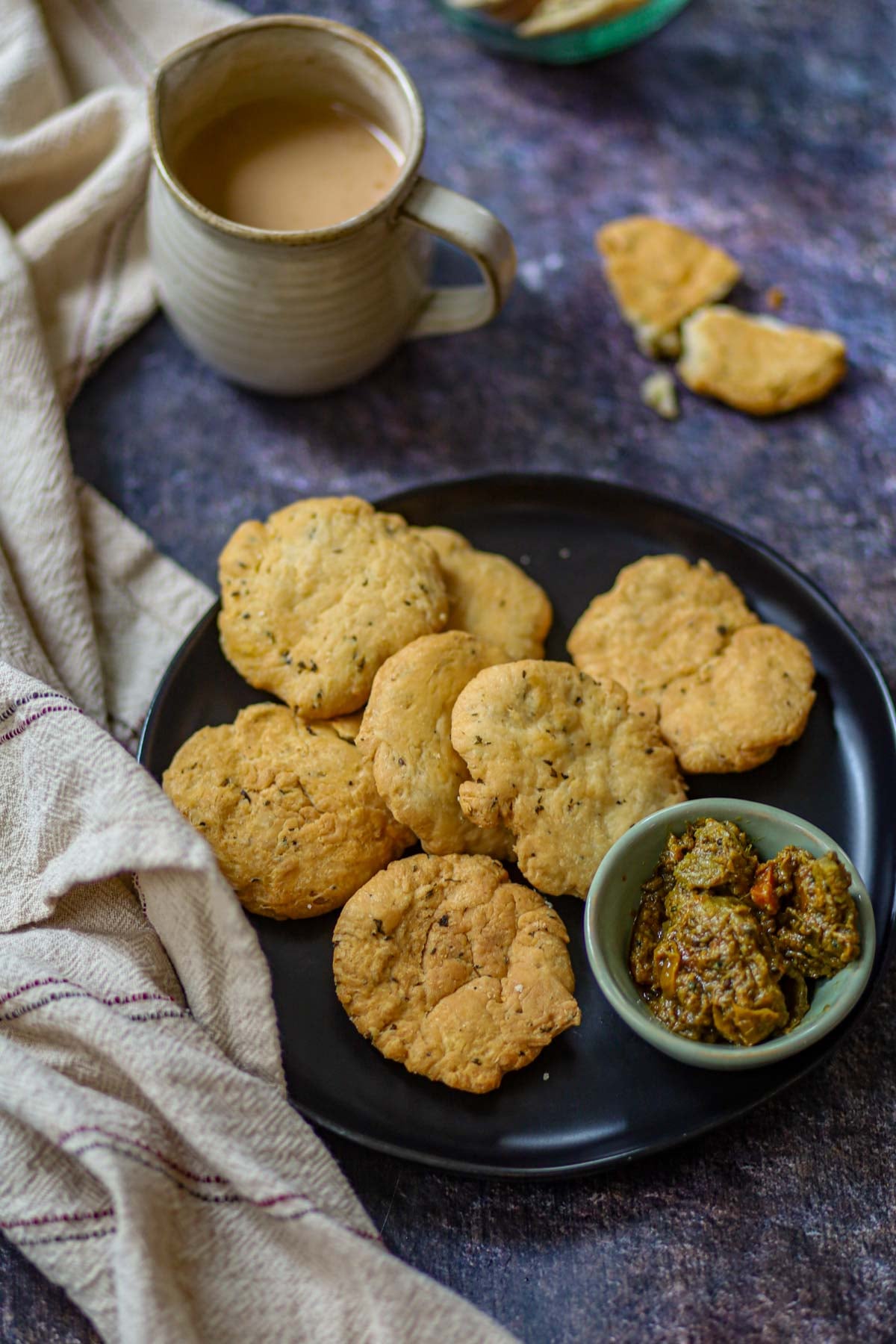
The biggest mistake with mathri is treating the dough like roti or paratha dough. Mathri dough should be firm and stiff, with water added only a little at a time.
The second important step is frying. I heat the oil over low heat and fry the mathri slowly on low heat, flipping every 2-3 minutes so they cook evenly, develop a beautiful golden color, and become crisp and flaky instead of staying soft in the middle.
They're perfect with chai and also store well, which makes them especially useful for Diwali, parties, or make-ahead snacking.
Jump to:
- Why You'll Love This Recipe
- What Is Mathri?
- Ingredient Notes
- The Most Important Step: Make a Stiff Dough
- How to Make Mathri
- Tips for Crispy, Flaky Mathri
- Why Does Mathri Turn Soft in the Middle?
- Why Do You Prick Mathri?
- How Thick Should Mathri Be?
- Serving Suggestions
- How to Store Mathri
- Can I Make Mathri Ahead?
- Variations
- Frequently Asked Questions
- More Indian Snacks
- Diwali Recipes
- Mathri Recipe | Crispy Punjabi Namkeen Mathri
Why You'll Love This Recipe
- Crispy, not soft in the middle: Slow frying gives the inside enough time to cook.
- Khasta texture: Ghee helps create a flaky, crumbly bite.
- Simple ingredients: You only need flour, ghee, a few spices, water, and oil.
- Great for Diwali: Easy to prepare ahead before entertaining.
- Stores well: Once completely cooled, mathri stays crisp in an airtight container.
- Perfect with chai: A classic savory tea-time snack.
What Is Mathri?
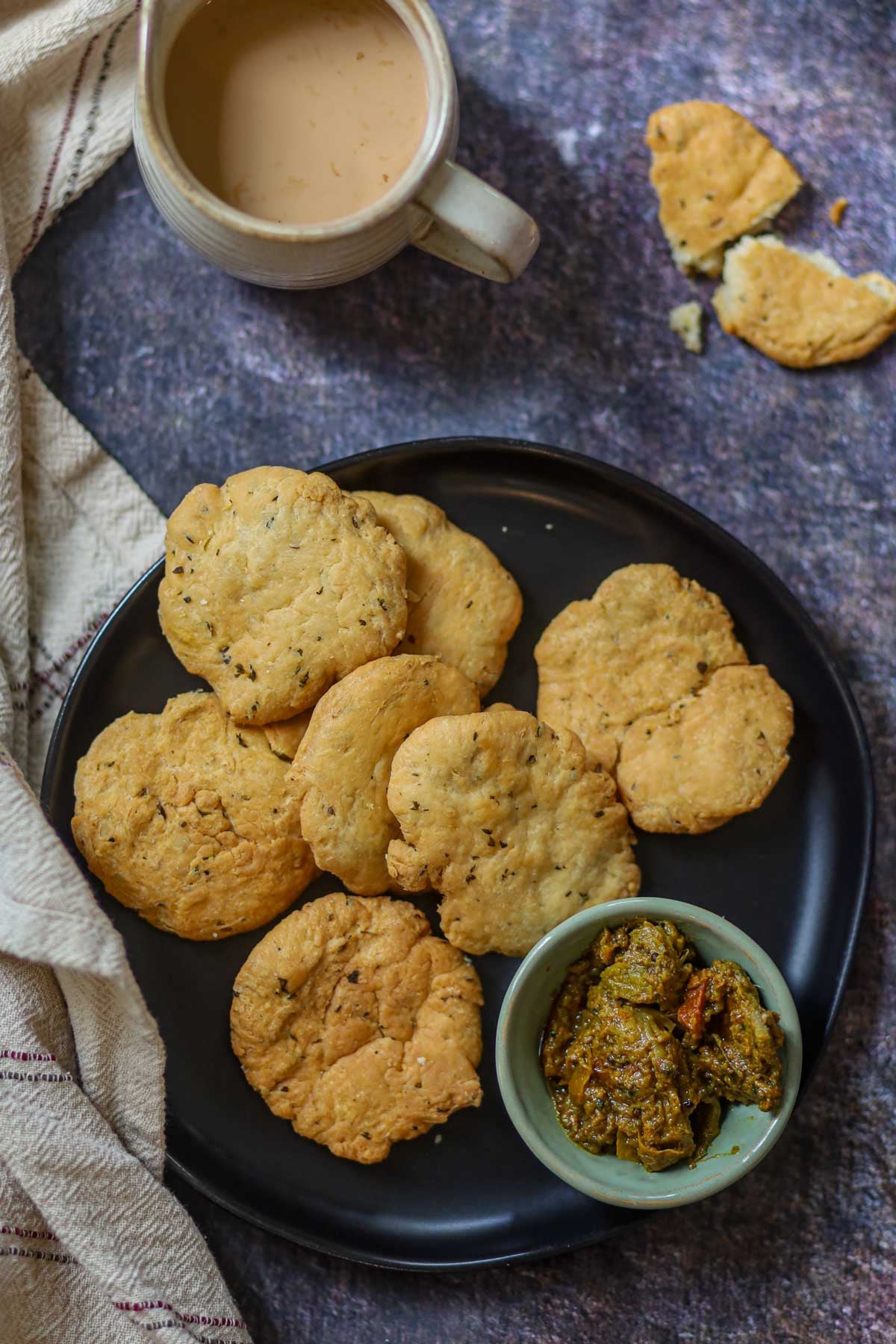
Mathri is a savory North Indian snack made from flour, fat, spices, and a small amount of water.
Roll the dough into small discs, prick them with a fork, and slowly fry until crisp and golden.
Unlike puri, mathri should not puff dramatically or stay soft. The goal is a firm, flaky, crunchy texture that keeps well after cooling.
Ajwain, cumin, and black pepper give this version plenty of savory flavor without needing a long spice list.
Ingredient Notes
- Maida: I use 2 cups all-purpose flour for the base.
- Ghee: Use 4 tablespoons (¼ cup) ghee. This helps create the flaky, khasta texture.
- Baking powder: Just ½ teaspoon helps lighten the texture slightly.
- Ajwain: 1 teaspoon carom seeds gives mathri its characteristic savory aroma.
- Cumin seeds: 1 teaspoon adds a warm, earthy flavor.
- Black peppercorns: 1 teaspoon adds little bursts of peppery flavor. Crush them slightly if you prefer.
- Salt: Add according to taste.
- Water: You will need less than ½ cup. Add it gradually instead of pouring it all in.
- Oil: Use enough oil for deep frying.
The Most Important Step: Make a Stiff Dough
Mathri dough should not feel like roti dough.
After mixing the flour, ghee, baking powder, salt, ajwain, cumin, and black pepper, start adding water a little at a time.
You may use less than ½ cup.
Stop adding water as soon as the flour comes together into a firm dough.
A softer dough can make the finished mathri less crisp and may also make them absorb more oil.
How to Make Mathri
1. ADD the Dry Ingredients
Add the flour, baking powder, salt, ajwain, cumin seeds, and black peppercorns to a large mixing bowl. Lightly mix the dry ingredients.
2. Add the Ghee
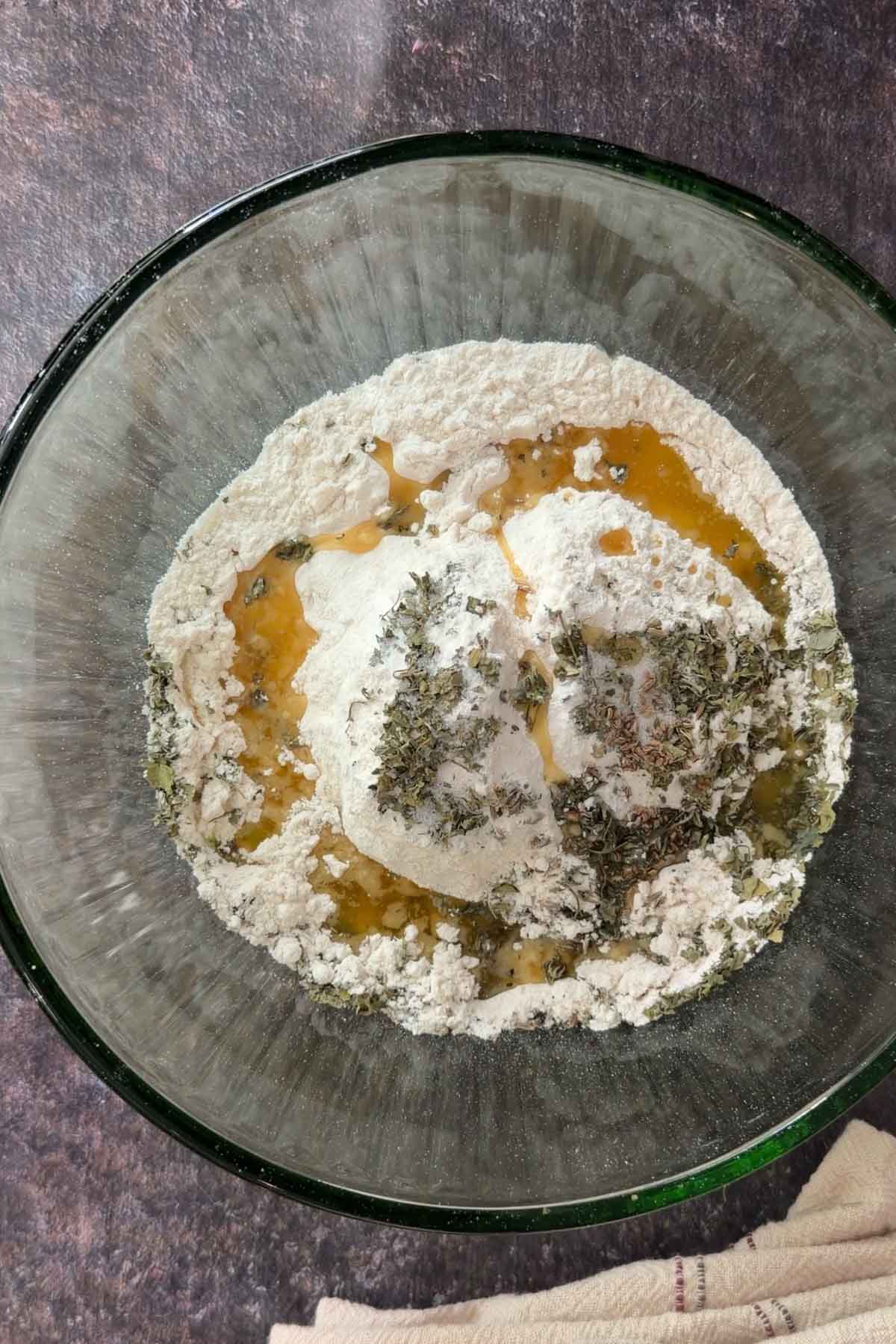
Add the ghee and rub it into the flour using your fingertips. Continue until the mixture looks crumbly.
When you press some of the flour mixture between your fingers, it should begin to hold together.
3. Make a Firm Dough
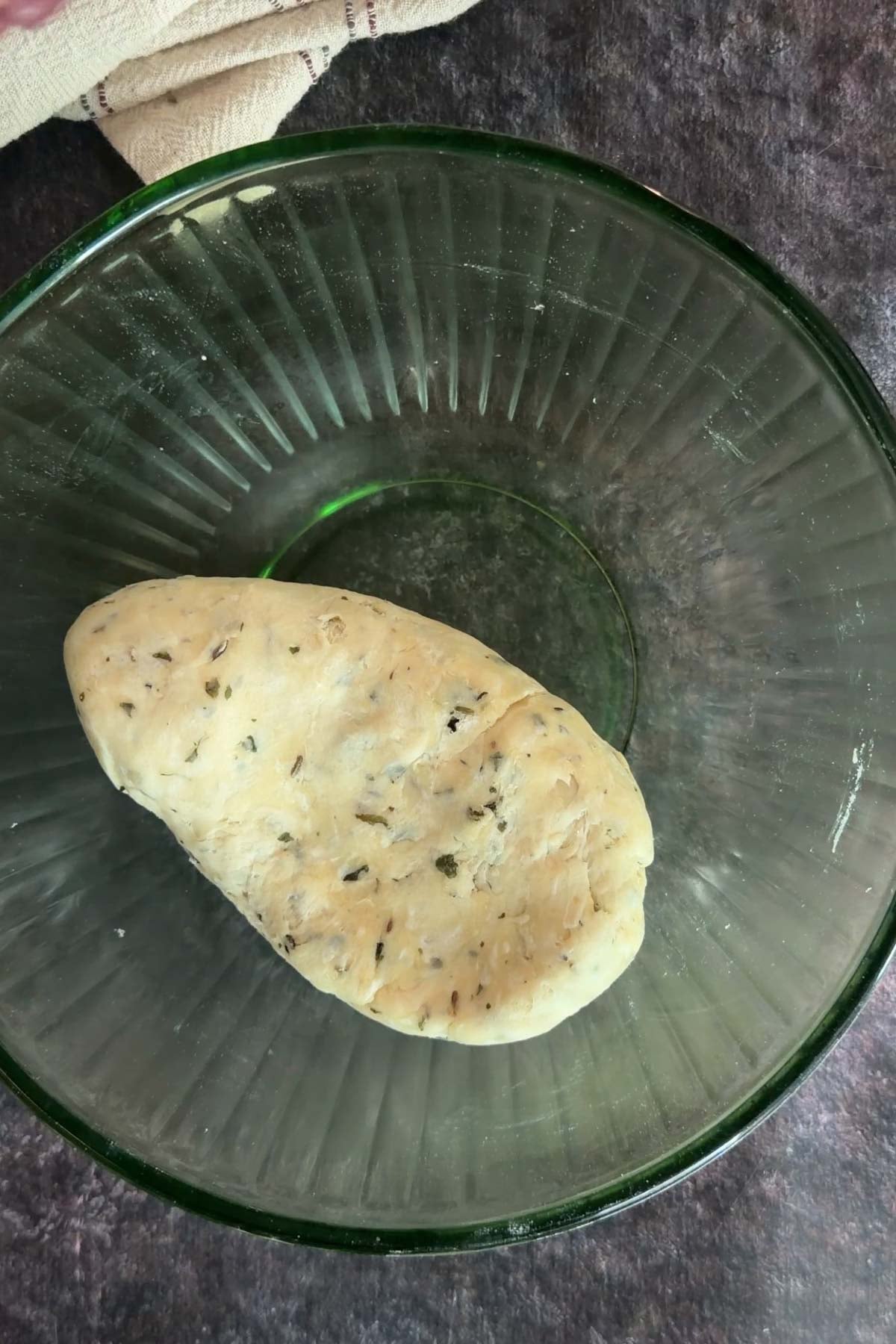
Start adding water a little at a time. Do not pour in all the water at once. Bring the mixture together into a firm, stiff dough.
Do not knead it like bread dough. You only need to bring everything together.
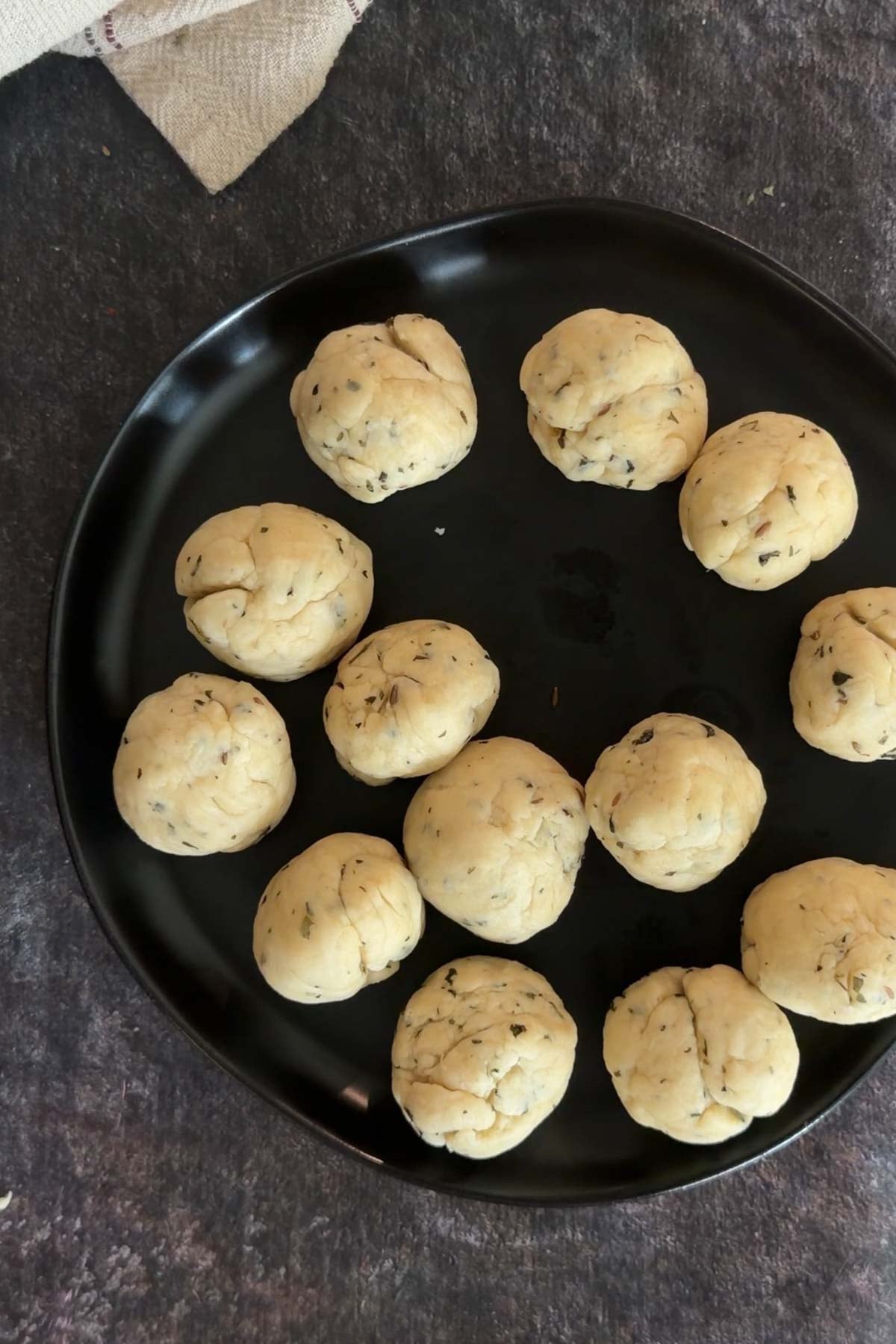
4. ROLL THE DOUGH
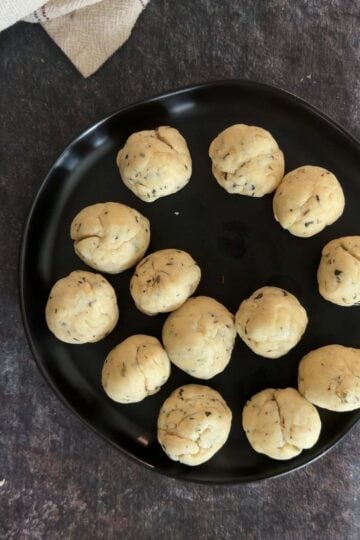
Roll the dough into equal-sized small balls.
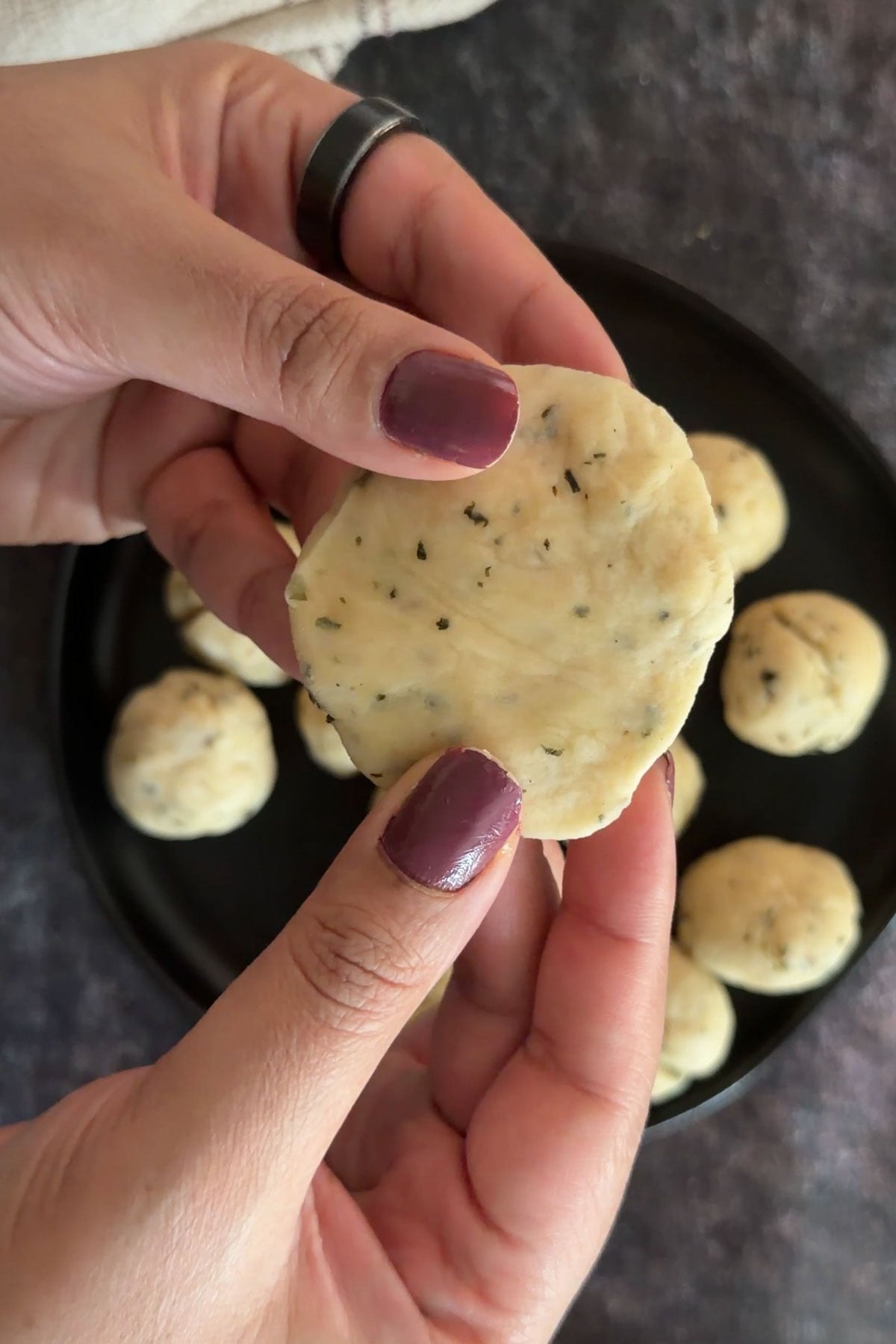
5. SHAPE the Mathri
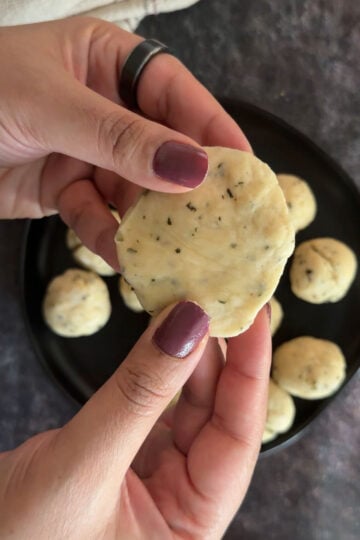
Take a ball and flatten it using the palms of your hands. Or flatten it by placing the dough between a plate or a cup. Make sure it's not too flat but has some structure, around 2 inches. Also prick it with a fork or a knife.
This prevents the mathri from puffing too much while frying and helps them stay flatter and crisp.
6. Heat the Oil on Low
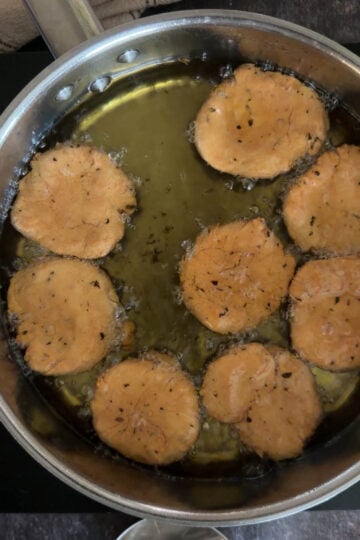
Add frying oil to a kadai or deep pan. Heat the oil over low heat. Don't let the oil get too hot.
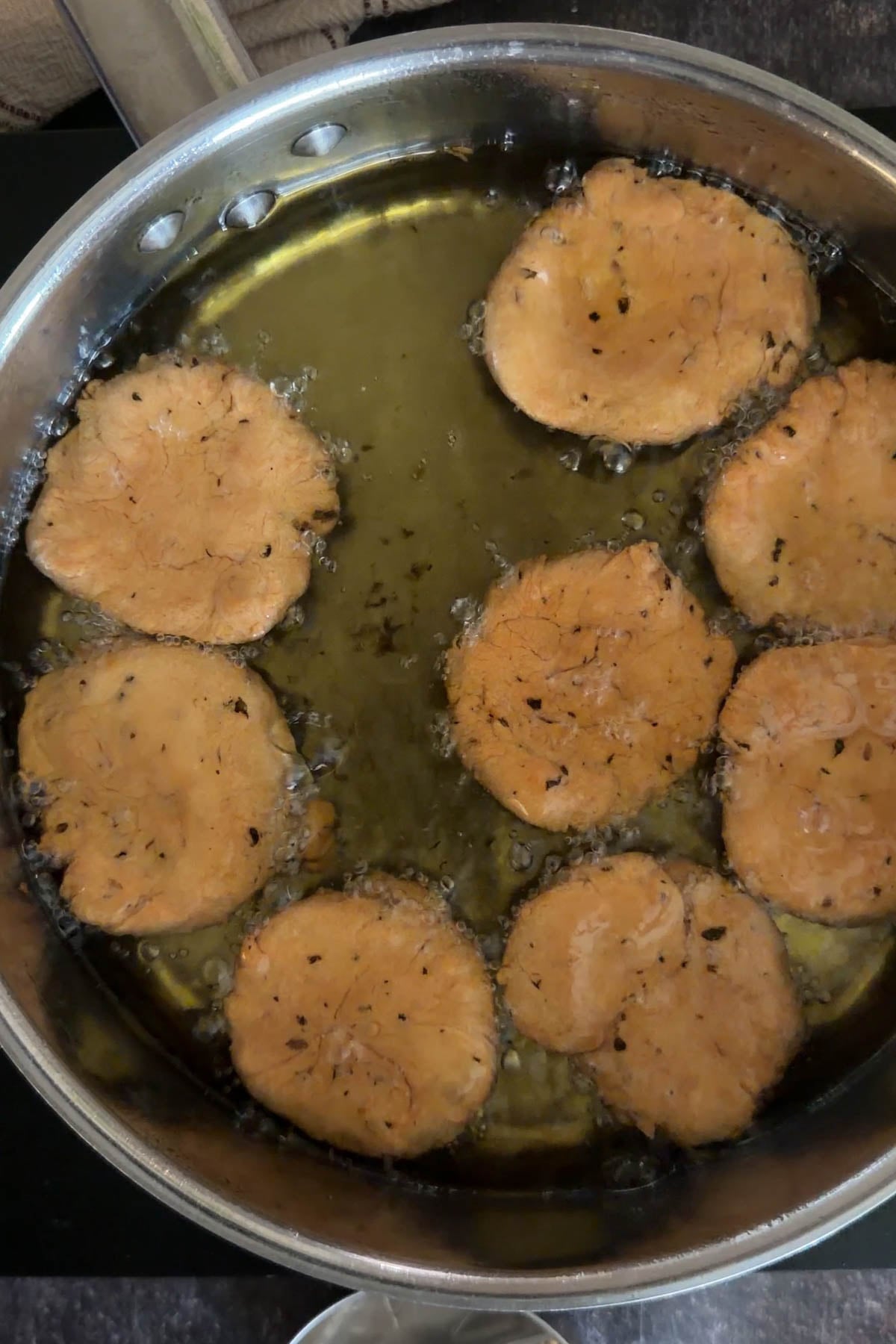
7. Fry Slowly
Add a few mathri at a time without overcrowding the pan. Fry them slowly on low heat. Flip them every 2-3 minutes or even texture throughout.
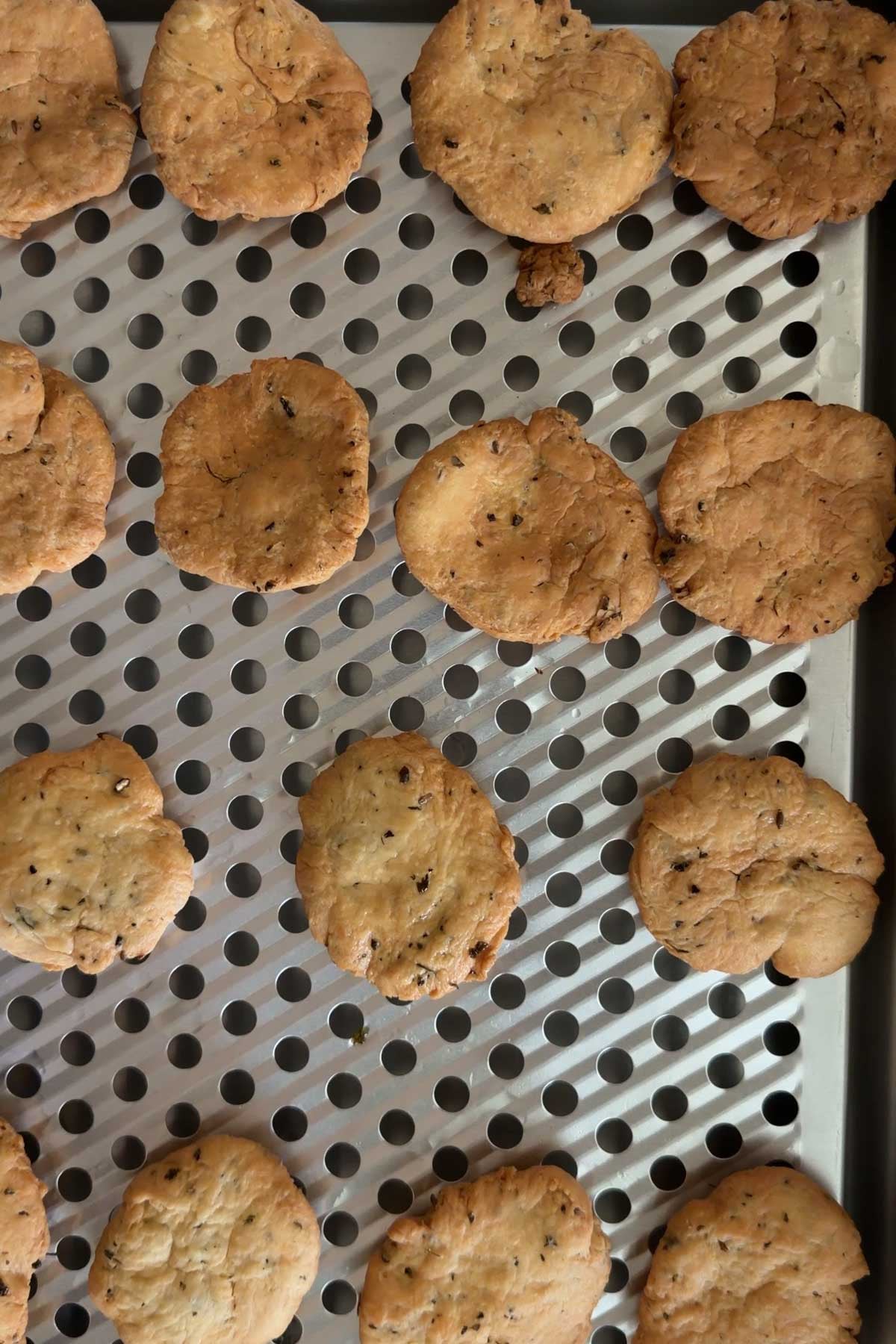
8. Drain and Cool
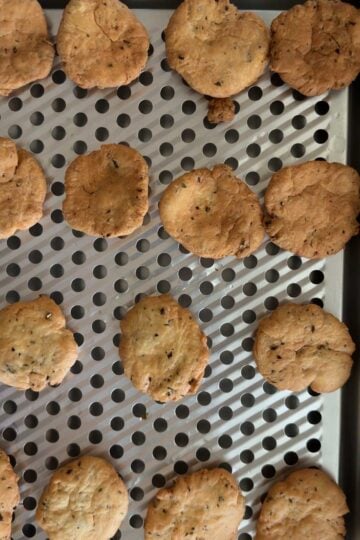
Remove the mathri and transfer them to a paper towel-lined plate or cooling rack. Let them cool completely before storing. They will become even crisper as they cool.
Tips for Crispy, Flaky Mathri
- Keep the dough firm: Add water gradually and use less than ½ cup.
- Use enough ghee: The ¼ cup ghee helps create that flaky, khasta texture.
- Do not over-knead: Bring the dough together just until combined.
- Prick each mathri: This prevents excessive puffing and helps them stay crisp.
- Fry only on low heat: High heat can brown the outside before the inside becomes crisp.
- Flip every 2-3 minutes: This helps both sides cook evenly and gives the mathri an even golden color.
- Do not overcrowd the pan: Fry in batches so the oil temperature stays steady.
- Cool completely before storing: Trapped steam can soften the mathri.
Why Does Mathri Turn Soft in the Middle?
Mathri usually turns soft inside when the outside cooks too quickly.
The most common reasons are:
- the oil is too hot
- the dough is too soft
- the mathri are rolled too thick
- they are removed from the oil too early
Slow frying on low heat is the biggest fix.
If the mathri turns dark quickly while frying, the oil is too hot.
Why Do You Prick Mathri?
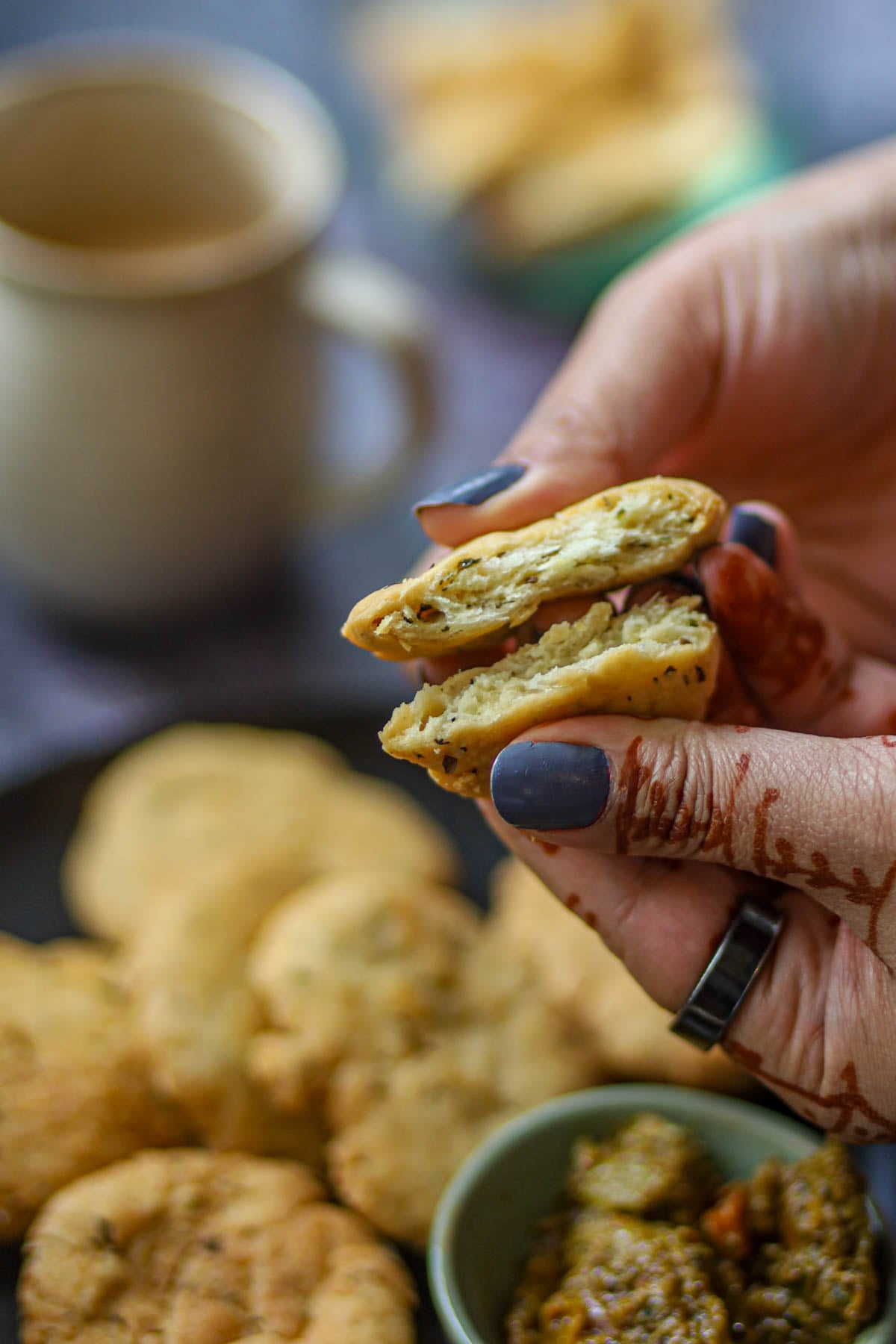
Pricking the dough with a fork helps stop it from puffing like puri. It also helps the mathri cook more evenly through the center. You only need a few fork holes across each disc.
How Thick Should Mathri Be?
I like keeping them slightly thicker than a roti but not extremely thick. If they are too thin, they can become hard rather than flaky. If they are too thick, the center can stay soft before the outside becomes golden.
Try to keep all of them similar in thickness so they fry at roughly the same rate.
Serving Suggestions
- Serve with hot masala chai or regular tea.
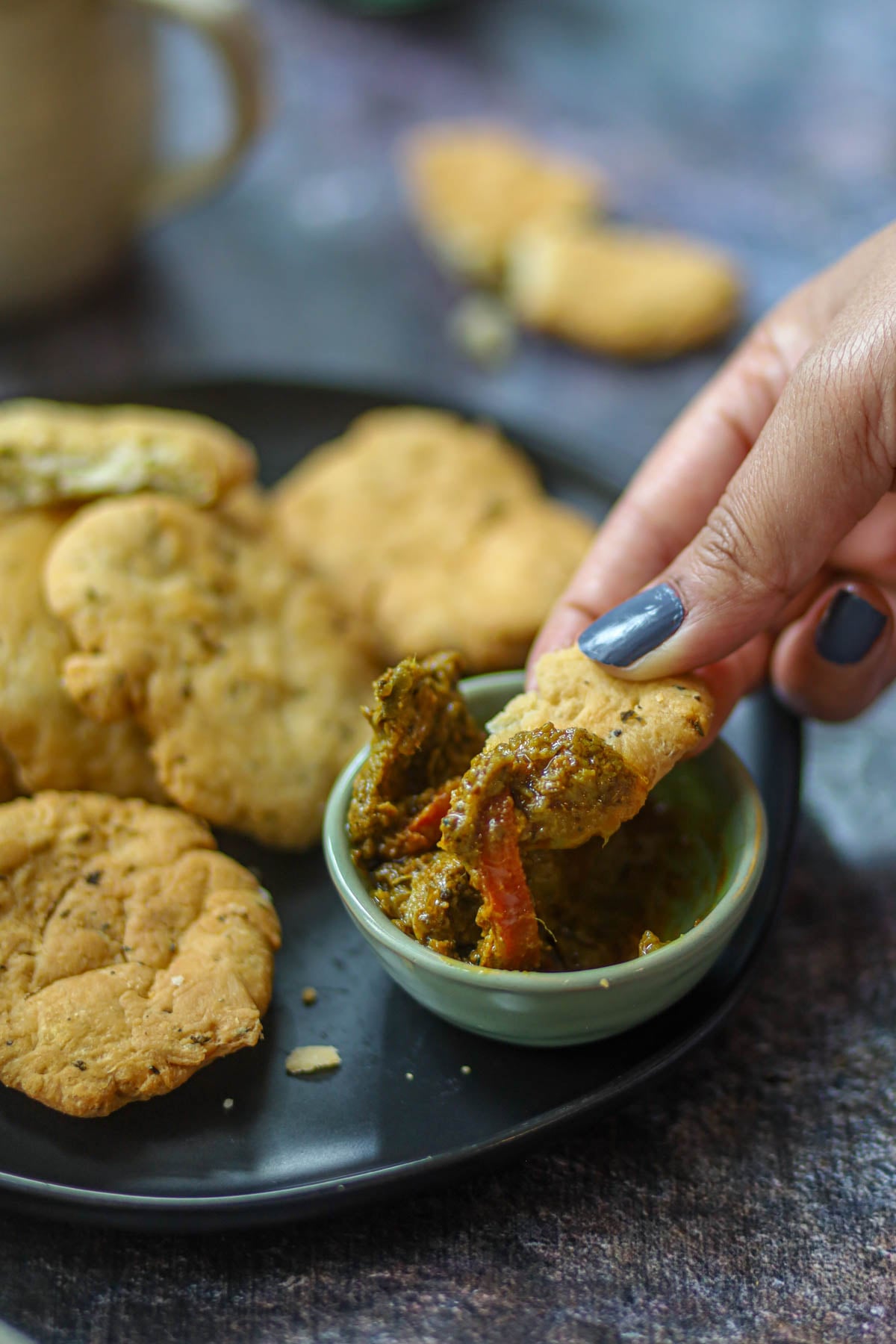
- Pair with Indian pickle for a salty, tangy contrast.
- Add to a Diwali snack platter with chakli, namak para, chivda, or roasted makhana.
- Serve as a make-ahead snack for parties or guests.
- Pack cooled mathri into snack boxes for travel.
How to Store Mathri
- Let the mathri cool completely first.
- Store in a clean, dry, airtight container.
- Keep moisture away from the container.
- Do not store while still warm, because trapped steam can make them soft.
- If made and fried properly, mathri can stay crisp for a long time.
Can I Make Mathri Ahead?
Yes.
Mathri is a great make-ahead snack because the texture holds well after cooling.
You can prepare them several days before Diwali, a party, or a family gathering and keep them in an airtight container.
Variations
- Methi Mathri: Add dried kasuri methi or fresh chopped methi to the dough.
- Spicier Mathri: Add more crushed black pepper or red chili powder.
- Jeera Mathri: Increase the cumin slightly for a stronger cumin flavor.
- Ajwain Mathri: Increase ajwain if you like its stronger aroma.
Frequently Asked Questions
Too little ghee, too much kneading, or rolling the mathri too thin can make them hard.
The dough may have been too soft, the oil may have been too hot, or you may not have fried them long enough.
You can, but ghee gives a richer flavor and a more traditional flaky texture.
More Indian Snacks
You can also explore more of my Punjabi recipes for comforting curries, snacks, and traditional favorites.
Diwali Recipes
- Gulab Jamun Recipe with Khoya
- Sabudana Kheer Recipe
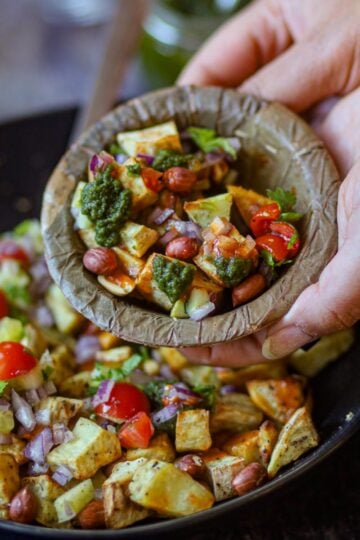
- Air Fryer Sweet Potato Chaat
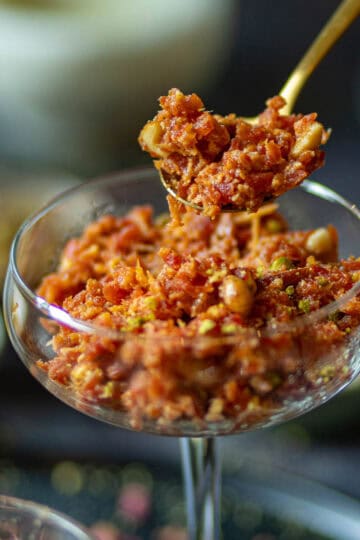
- CARROT HALWA WITH KHOYA
Tried this Mathri Recipe? Leave a comment below and let me know if you got that crisp, flaky texture after slow frying.
Mathri Recipe | Crispy Punjabi Namkeen Mathri
Ingredients
Equipment
Method
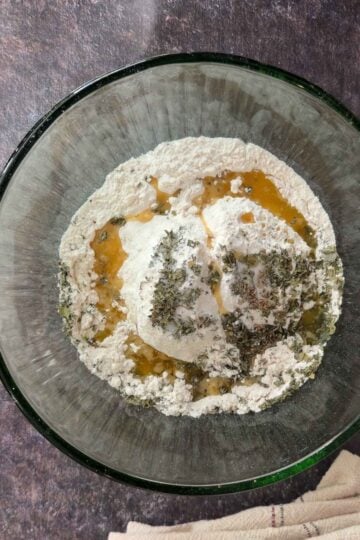
- Mix the dry ingredients: Add flour, baking powder, salt, kasuri methi, ajwain, cumin seeds, and black pepper to a large bowl.2 cups All-Purpose Flour, ½ teaspoon Baking Powder, Salt to taste, 2 tablespoon Kasuri Methi, 1 teaspoon Ajwain, 1 teaspoon Cumin Seeds, 1 teaspoon Black Peppercorns
- Add the ghee: Pour in the ghee and rub it into the flour with your fingertips until the mixture looks crumbly.4 tablespoon Ghee

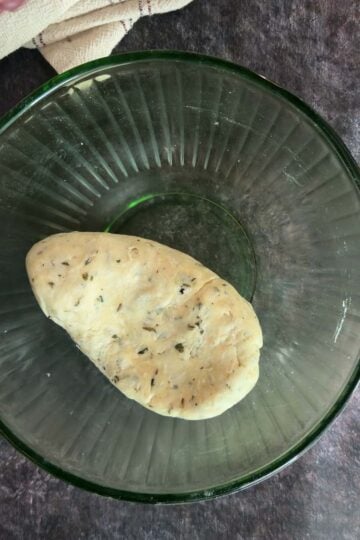
- Make a firm dough: Add water a little at a time, bringing everything together into a stiff dough. You will use less than ½ cup of water. Do not make the dough soft.⅓-1/2 cup Water
- Divide the dough: Portion the dough into roughly equal-sized balls.
- Shape the mathri: Flatten each ball into a small disc, pressing it between your palms to keep it slightly thicker than a roti.
- Prick the surface: Prick each mathri several times with a fork so it does not puff too much while frying.
- Heat the oil: Heat oil in a kadai or deep pan over low heat.Oil
- Fry slowly: Add the mathri in batches and fry on low heat.
- Flip every 2-3 minutes: Turn the mathri regularly so both sides cook evenly and develop an even golden color and flaky texture.
- Cook until crisp: Continue frying slowly until the mathri are golden and crisp all the way through, and not brown.
- Cool completely: Remove from the oil, drain, and let the mathri cool completely before storing.
Video
Nutrition
Notes
- Keep the dough stiff: A soft dough can make mathri less crisp.
- Add water gradually: Do not pour in the full amount at once.
- Rub the ghee into the flour well: This helps create the flaky, khasta texture.
- Do not over-knead: Bring the dough together just until combined.
- Prick the discs: This prevents excessive puffing during frying.
- Fry on low heat: High heat can brown the outside before the center becomes crisp.
- Flip every 2-3 minutes: This helps with even browning and consistent flakiness.
- Do not overcrowd the pan: Fry in batches.
- Cool completely before storing: Warm mathri can trap steam and soften.









Leave a Reply